Surviving an Arrest in Nairobi: A Young Man’s Struggle with Justice
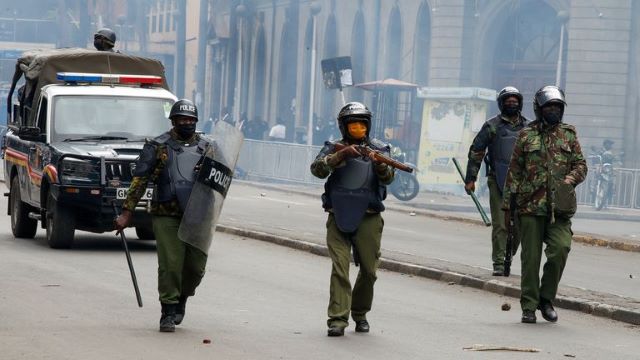
Nairobi, the busy capital city of Kenya, often referred to as the “City Under the Sun,” a place of hope and opportunity for many. People from all walks of life converge here in search of better prospects, whether for business, education, or personal growth. However, for many young men in Nairobi, the city also represents a harsh reality, one where justice is elusive, and the streets are rife with systemic injustice.
For many young people in Nairobi, facing arrest is almost a certainty. With a predominantly young population, Nairobi is full of unemployment, poverty, and desperation. Young men are often at the mercy of the police, who are quick to label them as suspects based on nothing more than their appearance or the area they come from. Many end up behind bars without ever being convicted, and in a system where corruption thrives, it becomes an uphill battle to prove their innocence.
One of the primary challenges for a young man facing arrest in Nairobi is navigating the corrupt system that controls both law enforcement and the courts. Police officers often demand bribes, and without money to pay them off, a young man may find himself in a holding cell with little hope of getting out. Those who refuse to comply with the bribe culture are often left to suffer in silence, waiting for a trial that may never come.
In the absence of a fair judicial system, many young men face long periods of detention without trial. In some cases, those who are arrested for petty offenses may end up spending months or even years in prison without ever seeing a judge. The condition of the police cells is often deplorable, and overcrowding is a common problem. This leaves many young people vulnerable to abuse, both physically and psychologically.
For those lucky enough to get a hearing, the road to justice remains equally treacherous. The court system in Nairobi is notorious for being slow, with cases dragging on for years, often resulting in delayed justice. In a court where corruption is rampant, the chances of receiving a fair trial are slim. Many young men face biased judgments, often due to the inability to bribe the right people or hire expensive lawyers. The lack of legal representation and knowledge further compounds their plight.
Moreover, young men in Nairobi are often subject to systemic discrimination. Their backgrounds, appearance, and socioeconomic status make them easy targets for the police, who are quick to assume guilt based on stereotypes. The lack of empathy from the judicial system, combined with the heavy burden of poverty, ensures that many young people are pushed to the margins of society.
Despite these challenges, young men in Nairobi have found ways to survive in the face of adversity. Some lean on their communities for support, while others turn to activism, using their voices to fight for justice and expose the corruption that plagues the system. Social media has become a powerful tool, allowing many to share their stories and rally for change.
The struggle for justice in Nairobi is a difficult one, especially for young men who often find themselves at odds with a corrupt system. Surviving an arrest, navigating the courts, and facing the harsh reality of a justice system that is often stacked against them is an uphill battle. However, with resilience, solidarity, and a relentless pursuit of fairness, many young men continue to fight for their rights, hoping for a future where justice is not a privilege but a right for all.