Dr. James Mwangi’s Banking Revolution
A Childhood Experience That Changed Everything
The hum of a bustling bank branch. The rustle of notes. The quiet dignity of a financial transaction. For millions across Africa, this has not always been the reality.
For Dr. James Mwangi, the CEO of Equity Group Holdings, this truth became personal during a moment that would shape his life and ultimately redefine African banking.
As a teenager, he watched his mother, Grace Wanjiru Mwangi, suffer public humiliation at a local bank. She was scolded loudly by a teller after a delay in her tea payment left her account empty. “Grace Wanjiru Mwangi, there’s no money!” the teller shouted before throwing back her withdrawal slip.
The humiliation wasn’t just about money. It was about dignity. For young Mwangi, it became a lifelong reminder of how demeaning banking could be for ordinary people.
From Pain to Purpose
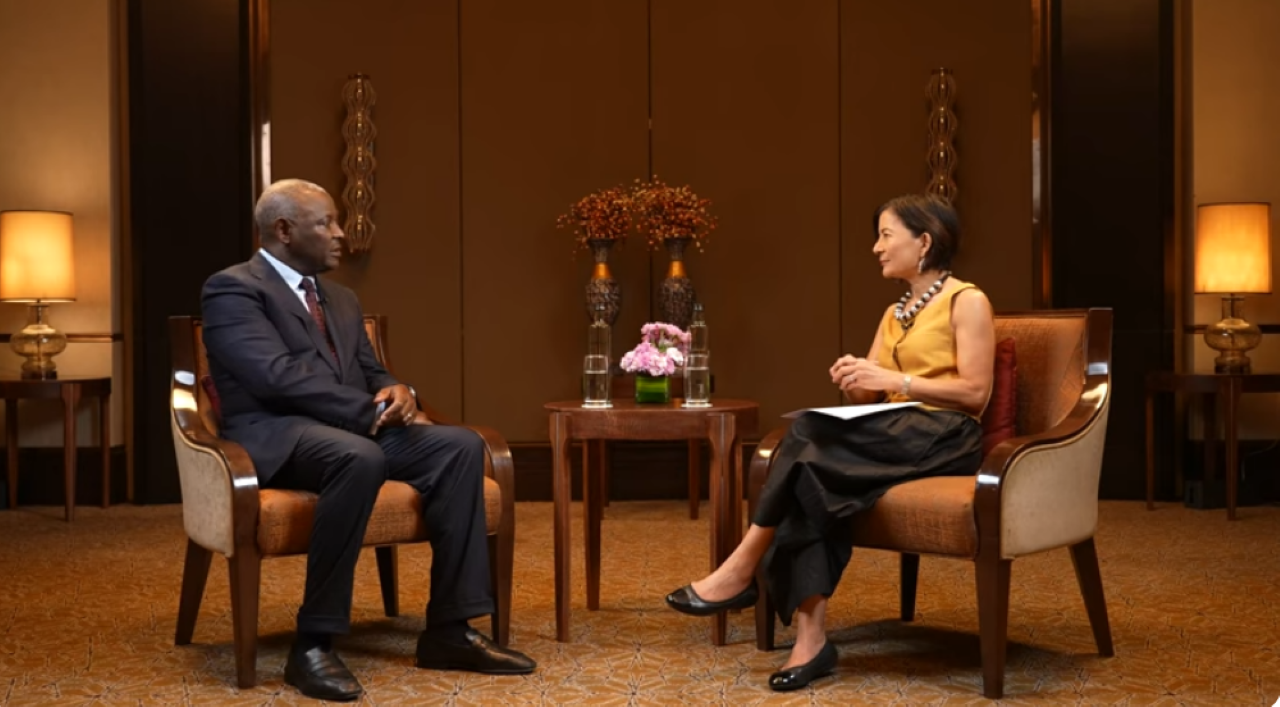
Years later, when he took over the struggling Equity Building Society, that memory guided his leadership. “The humiliation my mother went through helped to develop the corporate philosophy of Equity when I took over; dignity came before financial services,” Dr. Mwangi shared during an interview on the Transcending Boundaries podcast hosted by Reeta Roy, President and CEO of the Mastercard Foundation.
That philosophy became the foundation of Equity’s transformation from a near-insolvent building society into one of Africa’s largest and most inclusive financial institutions.
Redefining Financial Inclusion
Dr. Mwangi realized that inclusion was not only about access to money. It was about respect. Traditional banks excluded millions through rigid rules that punished the poor.
In the 1990s, opening an account required an introduction from an existing customer. For rural communities, that was nearly impossible. Dr. Mwangi scrapped that rule, saying, “If the Kenyan government has given you an ID, it knows you.”
He also abolished minimum balance requirements and monthly ledger fees that drained the little savings people managed to set aside. “It’s your money,” he insisted, challenging the notion that banks had more control over people’s funds than the customers themselves.
These reforms were not just operational. They were statements of empathy and trust.
Listening to the Market
Dr. Mwangi built Equity around listening. He spent time in villages and small markets, learning how people lived and what they needed. That approach inspired innovations like the mobile on four wheels project, where Land Rovers were converted into mobile branches that brought banking directly to rural communities.
Later came agency banking, empowering shopkeepers to serve as bank agents. Though met with skepticism at first, this model revolutionized access to banking across East Africa.
With the launch of Equitel, a mobile network integrating banking into SIM cards, Equity pushed inclusion even further, reaching people who did not own smartphones and removing the barriers of distance and time.
Beyond Banking: Empowering Communities
Equity’s impact extends far beyond finance. The Wings to Fly scholarship program, born from Mwangi’s appreciation of his mother’s sacrifices, provides full support to bright but financially disadvantaged students. With a 97 percent completion rate, it has opened doors for tens of thousands of students across the region.
The program has since evolved into the Elimu Scholarship Program, in partnership with organizations such as the World Bank, amplifying opportunities for young people.
Similarly, the Equity Afya healthcare network empowers doctors trained through Equity’s programs to run affordable clinics in their communities, extending the principle of dignity to health and wellbeing.
Banking with Dignity
Dr. Mwangi’s journey from a humiliated son to a pioneering CEO is a powerful reminder that empathy can drive transformation. By putting dignity at the center of banking, Equity Group proved that finance can serve people, not the other way around.
It is a story of how one man’s painful childhood experience ignited a movement that humanized banking, restoring respect, access, and opportunity for millions across Africa.
Watch the full interview: YouTube – Transcending Boundaries Podcast