Inside Kenya’s First Leadless Pacemaker
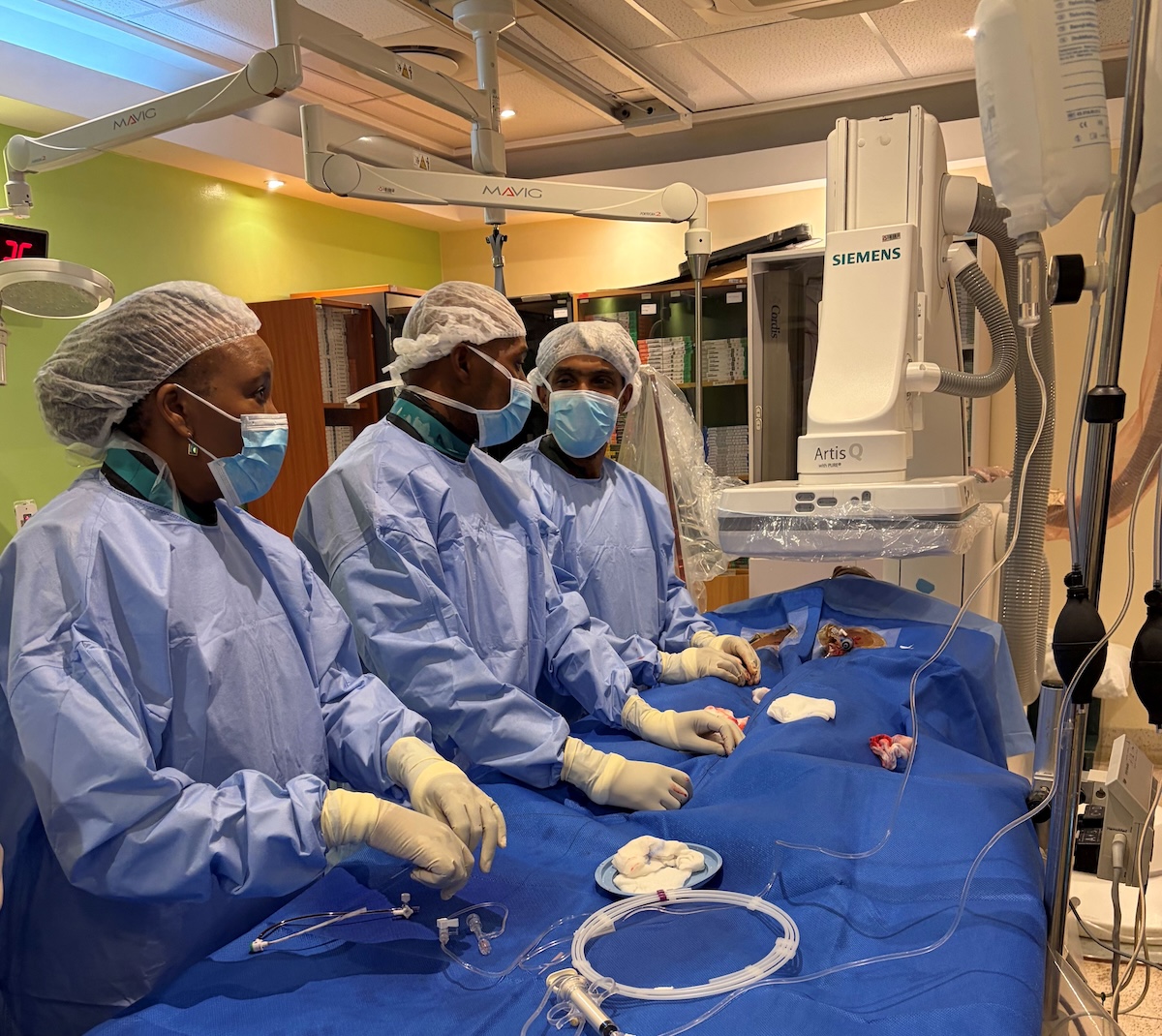
Kenya Achieves Regional First with Leadless Pacemaker Implant
Specialists at Aga Khan University Hospital (AKUH) have successfully implanted a leadless pacemaker for the first time in sub-Saharan Africa, marking a significant step forward in the region’s cardiac care capabilities.
The procedure was carried out by a multidisciplinary team led by Dr Mohamed Jeilan, Head of Cardiology at AKUH, placing the hospital among a select group of global centres offering this next-generation treatment.
A New Approach to Pacemakers
Unlike conventional pacemakers that require chest surgery and electrical leads inserted into the heart, leadless pacemakers are small, capsule-sized devices delivered directly into the heart through a catheter inserted via a vein in the leg.
The device sits entirely within the heart, removing the need for surgical incisions, wires, or implanted pockets—reducing both infection risk and long-term complications.
The first patient treated at AKUH required this approach due to severe blockage of the central veins, linked to long-term dialysis and prior radiotherapy, making traditional implantation both difficult and high risk.
“Leadless pacing provided an ideal solution in this case,” said Dr Jeilan. “It allows us to deliver effective therapy even when conventional access is not possible.”
Technology Expanding Access
The team used the latest-generation Micra AV2 leadless pacemaker, developed by Medtronic. The device is capable of coordinating electrical activity between heart chambers in selected patients, expanding eligibility beyond earlier versions of the technology.
Procedures typically take under an hour and are minimally invasive, making them especially valuable for patients at higher surgical risk.
A Milestone for Cardiac Care in Kenya
Dr Mzee Ngunga, President of the Kenya Cardiac Society and part of the procedural team, described the achievement as a major step forward.
“Increasingly, patients in our region are accessing advanced cardiac technologies locally. This reflects a shift from previous decades when such care was largely unavailable,” he said.
Leadless pacemakers are particularly beneficial for patients with blocked veins, those undergoing long-term dialysis, individuals at high risk of infection, or patients who have previously experienced device-related complications.
Strengthening Kenya’s Role in Regional Healthcare
This milestone builds on AKUH’s track record in introducing advanced cardiac procedures in Kenya, including coronary physiology (FFR), rotational atherectomy, renal denervation, and transcatheter aortic valve replacement.
It also reinforces Kenya’s growing position as a regional hub for specialised healthcare, reducing the need for patients to seek treatment abroad.
“Our goal goes beyond treatment,” Dr Jeilan added. “We want to build capacity, train African cardiologists, and expand access to modern therapies across the continent.”
With cardiovascular disease on the rise in Africa, innovations like leadless pacemakers are expected to play a critical role in strengthening healthcare systems and improving patient outcomes.