Exploring Nairobi National Park Through Uber Safari
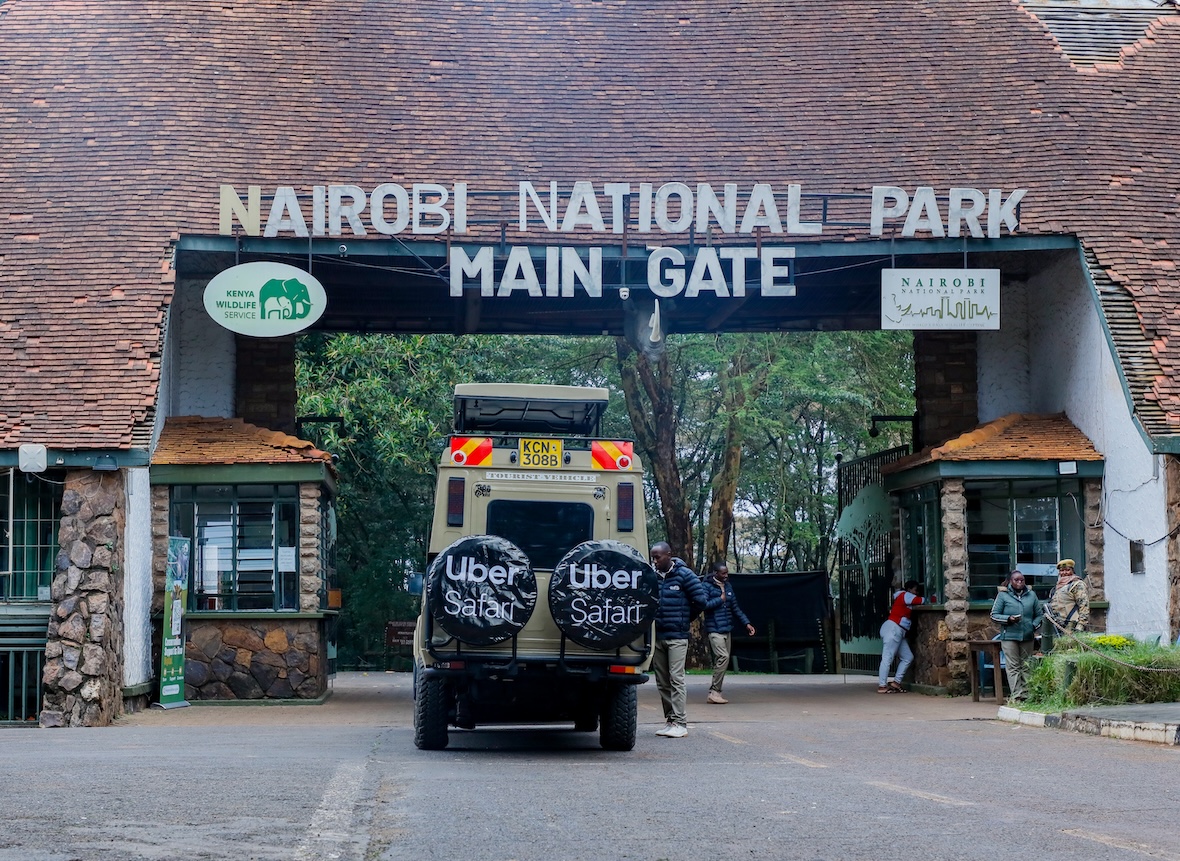
Uber Safari: Bringing Nairobi National Park Closer to More People
There is something special about entering Nairobi National Park.
Within minutes, the city’s noise begins to fade. The traffic disappears behind you. The skyline remains visible in the distance, yet suddenly you find yourself sharing space with zebras, giraffes, buffaloes and countless bird species roaming freely in their natural habitat.
It remains one of the most unique wildlife experiences in the world a uniquely Kenyan experience. In fact, Nairobi is the only capital city in the world with a national park on its doorstep.
That is why I was intrigued when I received an invitation from my friends at Kenya Airways and Uber to experience Uber Safari, a new tourism product that allows visitors to book a safari experience directly through the Uber app.
Affordable safari access. Easier booking. Technology meeting tourism. It is a modern approach designed to help younger travellers, city residents and international tourists experience wildlife without the planning challenges often associated with traditional game drives.
As someone who has visited Nairobi National Park several times before, I was curious to see how the experience would compare.
On paper, the concept makes a lot of sense. A safari experience that can be booked through a familiar platform. No complicated planning. No lengthy coordination. Just a few taps on an app and you’re on your way to one of Kenya’s most iconic attractions.
Bringing Tourism Closer to More People
Before getting into my experience, it is worth acknowledging what Uber Safari is trying to achieve.
For many Kenyans, safari experiences are often viewed as activities designed primarily for international tourists. Even residents living just a few kilometres from Nairobi National Park can go years without visiting.
Products like Uber Safari have the potential to change that. By integrating transport, booking convenience and safari experiences into a single platform, Uber is lowering barriers to access and introducing a new audience to wildlife tourism.
The initiative was launched as part of Uber’s 10-year anniversary celebrations in Kenya and developed in collaboration with tourism stakeholders, including the Kenya Wildlife Service (KWS), the Ministry of Tourism and local safari operators.
More importantly, it reflects a growing trend in which technology is being used to simplify access to tourism experiences and encourage greater participation in domestic tourism.

The Experience
Our journey began early in the morning as part of the Kenya Airways Aviation Media Lab, which brought together journalists and content creators from across Africa.
First impressions were positive. The vehicles were comfortable, breakfast was served and entering Nairobi National Park remains an experience that never gets old. Within a short time, we had already spotted baboons, giraffes, antelopes and buffaloes.
What struck me most was how easily someone unfamiliar with safari planning could access the experience. Instead of organising transport separately, identifying operators and coordinating logistics, everything had effectively been bundled into a single package.
That convenience should not be underestimated. As tourism increasingly competes for attention in a digital-first world, reducing friction matters.
Where Things Became More Complicated
Like many outdoor experiences, however, not everything went according to plan.
At one point during our drive, our vehicle became stuck in muddy terrain. Anyone familiar with safari environments knows that this can happen. Parks are unpredictable and so are weather conditions. The incident itself was not necessarily the issue.
What surprised me was the response and coordination that followed.
One of the strengths of traditional safari operations is the network effect between drivers. Experienced safari guides frequently communicate with one another, sharing information about animal sightings, road conditions and difficult terrain.
They rely heavily on radio communication and networks built over years of operating in the park. One driver spots lions near a particular route, another warns others about muddy sections or damaged roads and suddenly the entire ecosystem is working together.
That informal network often plays a significant role in helping visitors maximise their experience. On this occasion, that level of coordination was not immediately apparent.
The experience highlighted the importance of strong operational systems and communication in delivering consistently high-quality safari experiences.
It is also important to acknowledge that our visit took place within a tightly scheduled media programme. Unlike a typical customer booking, we were operating within a fixed itinerary that limited the amount of time available in the park.
The Bigger Opportunity
Despite those challenges, I left the experience believing that the broader concept behind Uber Safari is a strong one.
Tourism remains one of Kenya’s most important economic sectors, and mobility plays a critical role in connecting people to destinations, attractions, hotels, restaurants and experiences.
Safari tourism is central to Kenya’s global tourism identity, which means that new tourism products entering the market carry a responsibility that goes beyond convenience. The experience has to work consistently and deliver value to visitors.
Making tourism more accessible creates benefits that extend far beyond travellers themselves. Drivers, guides, hospitality businesses, photographers, retailers and conservation stakeholders all stand to benefit when more people are encouraged to explore Kenya’s tourism offerings.
There is also an important conservation angle worth considering. The more people experience wildlife and protected areas firsthand, the more likely they are to appreciate the importance of conservation efforts. Every new visitor represents a potential advocate for protecting Kenya’s natural heritage.
The initiative also demonstrates how partnerships between technology companies, tourism operators, conservation agencies and airlines can help create new experiences that support destination marketing and drive domestic tourism growth.
Final Thoughts
Uber Safari may still have areas to refine, particularly around operational coordination and the nuances that make traditional game drives so effective. However, the broader idea is both timely and promising.
At a time when younger travellers increasingly expect convenience, accessibility and digital-first experiences, products like Uber Safari have the potential to introduce a new generation of visitors to Kenya’s wildlife heritage.
And if that results in more people discovering the magic of Nairobi National Park just minutes from one of Africa’s busiest cities that can only be a good thing.