Bakery Business Wins I&M Predator’s Den
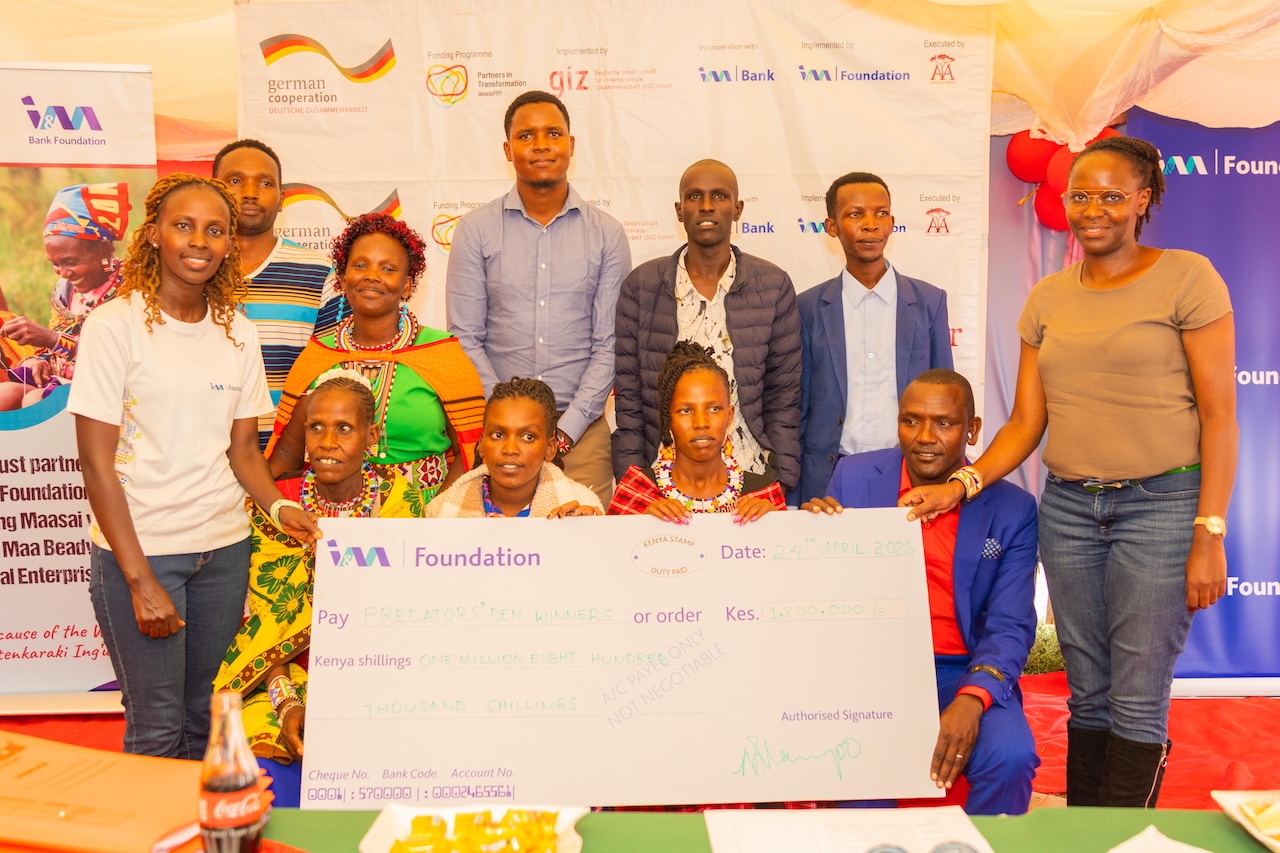
Spotlight on a Winning Pitch at Talek Predator’s Den
A quiet economic shift is taking shape in the Maasai Mara. Beyond the safari lodges and wildlife conservancies, local entrepreneurs are building businesses that are creating jobs, improving access to services and giving communities a greater stake in the future of one of Kenya’s most important conservation landscapes.
At the centre of this effort is The Predator’s Den, an entrepreneurship programme that has channelled Kes 1.92 million in funding, scholarships and business support to nine entrepreneurs from communities within the Greater Mara Ecosystem.
The initiative forms part of a Kes 230 million programme supported by I&M Foundation, I&M Bank and the German development agency GIZ through the develoPPP programme and implemented by The Maa Trust. The programme is designed to strengthen livelihoods while promoting conservation by helping young people and women turn ideas into sustainable enterprises.
Across the Mara, businesses focused on food production, water access, digital services and environmentally friendly products are beginning to take root. The entrepreneurs behind them have gone through training in financial literacy, business development and pitching skills, giving them tools to grow enterprises that respond to local needs.
Among the notable ventures is a bakery business owned by Carl Leitato Naurori, which has been acknowledged for its job creating potential in the community. Another is Martin Kiok’s cyber café, helping residents to acquire digital skills and improve access to online services in an area where connectivity is still patchy.
Other supported enterprises include livestock farming, poultry production, textile and cultural wear businesses, honey production and water-related solutions. Together, they paint a picture of an ecosystem where conservation and economic opportunity are increasingly being viewed as partners rather than separate pursuits.
For organisations behind the initiative, the thinking is straightforward: communities are more likely to protect natural resources when they have reliable sources of income and can directly benefit from preserving the environment around them.
In the Maasai Mara, entrepreneurship is becoming part of the conservation story. The pitches made at Talek’s Predator’s Den are turning into businesses that could help shape the future of both local livelihoods and one of Kenya’s most celebrated landscapes.