Making It in Kenya Now Means Mastering Digital Payments
Making It in Kenya Now Means Mastering Digital Payments
Ask a boutique owner in Kilimani how business is going and you will rarely hear about foot traffic first. You will hear about her phone. Whether the transfer alert came through, whether the card tap went through on the first try, whether a customer walked off because the payment link was slow to load. Somewhere along the way, the smartphone stopped being a side tool for Kenyan entrepreneurs and became the actual shop counter.
That shift is what makes 2026 feel different from the hustle culture Kenyans grew up hearing about. Making it used to mean owning a physical shop, a till number stuck on the wall, maybe a POS machine rented from the bank for a monthly fee that ate into thin margins. Now it increasingly means knowing how to move digital payments through whatever device is already in your pocket, and doing it fast enough that a customer never has to think twice.
The card machine nobody had to buy
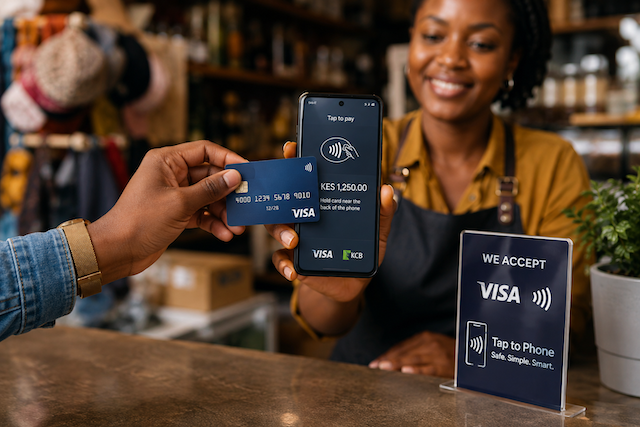
The clearest sign of this is Tap to Phone, a Visa-backed service already running through KCB Bank Kenya. The concept sounds almost too simple: a merchant’s own Android phone becomes the card reader. A customer taps their bank card, phone, or watch against it, and the sale clears without anyone buying extra hardware. For a small trader, that removes the single biggest barrier to accepting card payments, which was never really about willingness. It was about cost.
Co-operative Bank is preparing to roll out a similar tool, Visa Accept, in the coming weeks, following a wider push by Visa to turn phones into what the company calls all-in-one business hubs, capable of taking payments, paying suppliers, and settling wages from one device. Access to this kind of infrastructure used to be reserved for businesses large enough to negotiate with a bank. Now it is showing up for the vendor who packs up her stall every evening at Toi Market and the freelance photographer who shoots weddings on weekends and needs to collect a deposit before the couple even leaves the venue.
None of this replaces M-Pesa, and it is not meant to. Mobile money already solved the problem of getting Kenyans without bank accounts into the digital economy. What card-based tools add is a second lane, one that works for tourists, for customers with bank cards rather than local mobile wallets, and for businesses that want their sales recorded automatically rather than tracked in a notebook or a WhatsApp chat history that gets deleted by accident.
Entrepreneurship now runs on more than hustle
Talk to anyone building a business in Nairobi right now and the pattern repeats itself. Orders land on Instagram or TikTok. Deliveries get coordinated over a phone call. The books, such as they are, live inside a mobile banking app. Digital payments did not create that behaviour. They simply plugged into it, adding one more function to a device that was already carrying the weight of marketing, logistics, and customer service.
That matters for the creator economy too, a space that barely existed in its current form a decade ago. A fitness coach training clients in a park in Karen, a content creator selling merchandise off a personal page, a caterer taking orders for a weekend market in Ngong Road. None of them fit the old template of a registered business with a fixed location, yet all of them need a way to get paid that feels instant and trustworthy. Digital payment tools built for smartphones fit that reality far better than a rented card machine ever did.
It would be dishonest to call this a smooth transition for everyone. Network downtime still happens. Not every customer trusts a payment prompt on a stranger’s phone, and some older traders remain more comfortable with cash changing hands where they can see it. Financial inclusion is not a switch that flips overnight, and the informal economy that Kenya runs on will take time to fully move into digital records, if it ever moves entirely.
Still, the direction is hard to miss. Banks are competing to distribute these tools because the cost of doing so is low and the upside, in customer loyalty and transaction data, is significant. Visa has been widening its footprint in Kenya through partnerships that stretch from tourism operators to shared payment infrastructure providers, and the traders who adopt these tools early tend to describe the same thing: faster queues, fewer disputes over change, and money that lands in the account before the customer has even walked away.
That, more than any slogan, is what making it looks like in Kenya this year. Not a single big break, but a slow accumulation of small conveniences, each one making it a little easier to run a business from a phone that was never designed to be a business tool in the first place.