Absa Kenya H1 Profit Hits Ksh 10.5 Billion
Absa Bank Kenya closed the first half of 2026 with a stronger balance sheet, rising customer deposits and a 21.7% return on equity as the lender pushes deeper into business financing, home ownership and youth entrepreneurship.
Absa Bank Kenya is entering the second half of the year with a bigger balance sheet and a broader lending strategy after customer assets grew 8% to Ksh 329.9 billion in the six months ended June 30, 2026.
Customer deposits also increased by 5% to Ksh 380.7 billion, while total assets reached Ksh 558.1 billion.
The bank reported Ksh 10.5 billion in profit after tax, according to its results announcement, alongside a return on equity of 21.7%. Its capital adequacy ratio stood at 19.4%, while liquidity reserves were at 42.7%.
The numbers come against a changing interest rate environment that has put pressure on banking margins while creating opportunities for lenders with strong funding positions and diversified income streams.
For Absa, the response has been to keep growing its customer business while expanding the range of products beyond traditional lending.
A Bigger Balance Sheet, Different Growth Strategy
Absa recorded total revenue of Ksh 29.3 billion during the period.
Net interest income contributed Ksh 21.1 billion, while non-interest income came in at Ksh 8.2 billion.
But one of the more interesting developments was the growing contribution from the bank’s subsidiaries. Income from these businesses increased by 20% year on year, supported by activities including asset management, custody services and bancassurance.
That diversification matters at a time when lower interest rates can put pressure on conventional lending income.
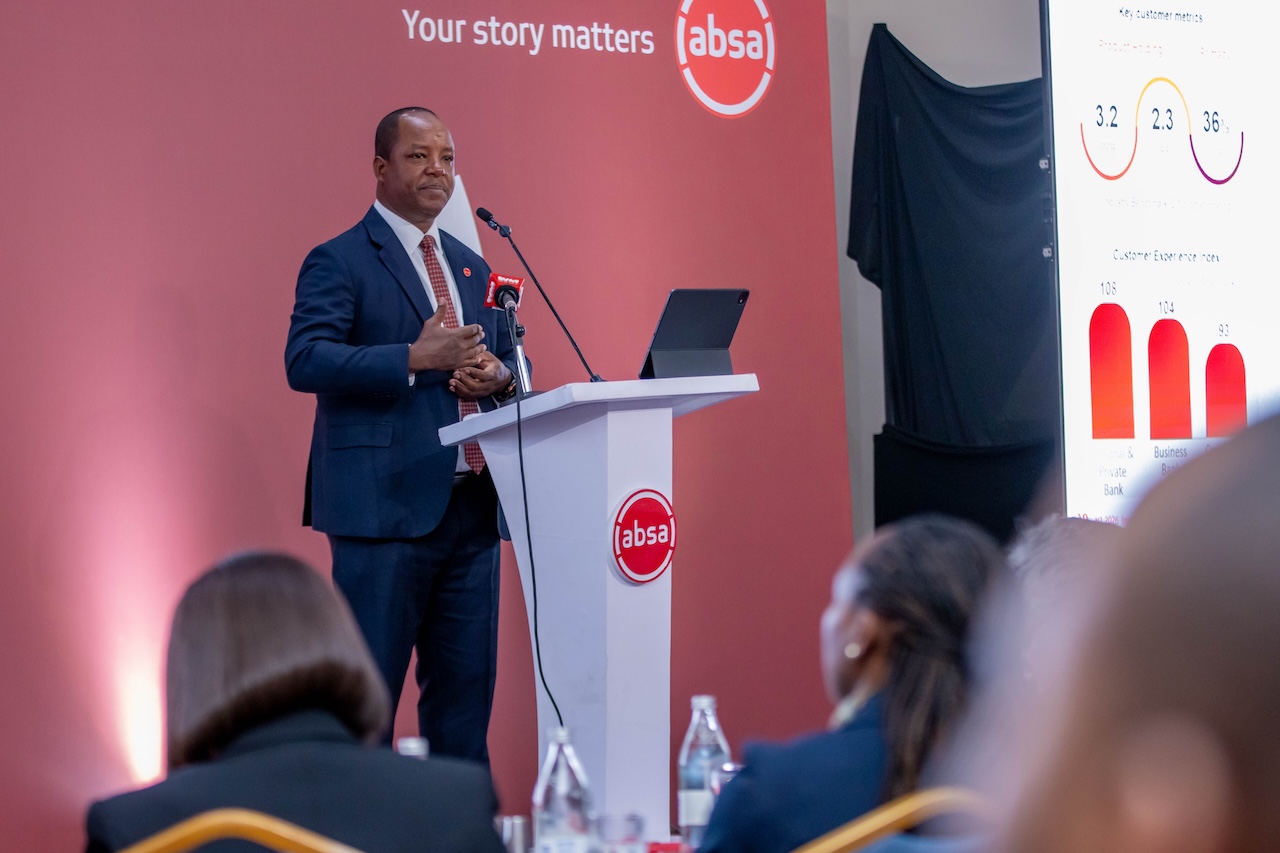
Absa’s Interim Managing Director and CEO, Yusuf Omari, said the bank maintained momentum during the second quarter despite a challenging operating environment.
“The Bank recorded strong momentum in the second quarter.”
He attributed the performance to disciplined execution, continued customer support and investment in the long-term resilience of the business.
Absa Is Putting More Money Behind Businesses
Perhaps the clearest indication of where Absa sees its next phase of growth is in its asset financing strategy.
The bank has committed Ksh 100 billion over the next three years to finance businesses and individuals across sectors including manufacturing, healthcare, education, infrastructure, trade and logistics.
The proposition provides up to 100% financing for selected assets.
That is a significant commitment at a time when businesses are looking for ways to expand capacity without having to fund the entire cost of new equipment and assets from their own cash flows.
It also fits into a wider strategy of moving closer to businesses across different stages of their growth.
For Absa, the opportunity is particularly relevant in sectors where investment in machinery, vehicles, equipment and infrastructure can directly affect productivity.
A Push Into Homeownership and Youth Enterprise
The bank is also pursuing growth beyond established businesses.
During the period, Absa launched a developer-led home financing proposition offering a stated interest rate of 8.9% per annum and financing of up to 105% for qualifying homebuyers.
The bank also launched the Ksh 1 billion Zinduka Graduate Enterprise Programme, aimed at helping young entrepreneurs access affordable financing.
The two initiatives point to a broader attempt to reach customers at different points in their financial lives, from buying a first home to starting a business.
That approach could become increasingly important as banks compete for younger customers and entrepreneurs who may eventually become larger borrowers and depositors.
Financial Strength Remains a Key Part of the Story
Despite the focus on lending and expansion, Absa’s latest figures also show a bank maintaining significant capital and liquidity buffers.
Capital adequacy stood at 19.4%, while liquidity reserves were at 42.7%.
The bank’s total assets of Ksh 558.1 billion also underline the scale of its Kenyan operation.
For customers and investors, those figures provide another part of the picture. Growth in lending and deposits matters, but so does the bank’s ability to maintain adequate buffers as the operating environment changes.
Absa Group Deepens Kenya Stake as Bank Posts Resilient H1 2026 Results
From Banking to a Broader Consumer Business
Absa is also investing in areas beyond its core financial products.
During the period, the bank continued its sponsorship of major sporting events including the Absa Kip Keino Classic, Absa Sirikwa Classic and the Magical Kenya Open presented by Absa.
Through the Absa Kenya Foundation, it also launched the Circularising Programme, targeting more than 2,000 businesses operating in the circular economy with financial and non-financial support.
These initiatives sit alongside the bank’s stated ambition to become a modern consumer business, strengthen its position in Business Banking and expand its Corporate and Investment Banking capabilities.
Omari said the strategy remains centred on customer-led growth, sector specialisation and operational efficiency.
Shareholders Get an Interim Dividend
The results also came with a direct return for shareholders.
Absa’s Board approved an interim dividend of Ksh 0.50 per ordinary share.
The payout comes as the bank balances investment in its growth businesses with its commitment to shareholder returns.
The bigger question for the second half of the year will be whether Absa can maintain its momentum as the lending environment changes and competition across Kenya’s banking sector intensifies.
For now, the first-half numbers show a lender expanding its customer base, putting more capital behind businesses and broadening the sources of its income.
The Ksh 10.5 billion profit is the headline figure.
The more interesting story may be what Absa is doing with the balance sheet behind it.