Ngong Road Forest Restoration: How I&M Bank Is Creating Safer Green Spaces in Nairobi
For years, Ngong Road Forest sat at the edge of the city as a resource few Nairobians could actually use. The trees were there, the birdlife was there, the clean air was there, but unfenced boundaries and criminal activity kept most residents out. A forest that should have been a lung for a fast-growing capital instead became a space people drove past rather than walked through.
That is beginning to change and the shift says as much about how Nairobi thinks about green space as it does about the forest itself.
A city that has outgrown its green space
Nairobi’s population keeps climbing, but the city’s public green space has not kept pace. Parks get smaller or disappear entirely, pavements are treated as an afterthought, and residents with the means to exercise outdoors often end up doing it behind gated compounds or inside gyms. For everyone else, safe outdoor recreation is simply harder to come by.
Urban forests solve more than one problem at once. They clean the air in a city with a growing vehicle count, they hold ground that would otherwise be lost to construction, and they give residents, regardless of income, a place to walk, run or simply sit outside. But none of that works if the forest itself is not safe to enter.
Project Imarisha Ngong Forest
In April 2024, the I&M Foundation signed a partnership agreement with the Kenya Forest Service to restore Ngong Road Forest, committing KES 162 million over three years to what is now known as Project Imarisha Ngong Forest. The project runs in three phases: fencing and infrastructure rehabilitation, restoration of degraded forest areas alongside scaling up seedling production and improving mobility and security within the forest.
Community engagement has run alongside the physical work. Public participation exercises were held across Dagoretti South, Kibera and Lang’ata, the neighbourhoods that border the forest and stand to gain the most from a safer, more accessible green space next door.
By the end of 2025, fencing and security upgrades were complete on Section 4, the largest block within the Ngong Road Forest Sanctuary. The impact has been practical rather than symbolic: less illegal access, better protection for the forest’s biodiversity and for the first time in a long while, a stretch of forest residents can enter without fear.
Sarit Raja-Shah, Group Executive Director of I&M Group PLC and an I&M Foundation Director, has described the project as one that gives Nairobi residents a genuine safe space for physical activity and social life, not just a conservation exercise on paper.
Why the report launched in a forest, not a boardroom
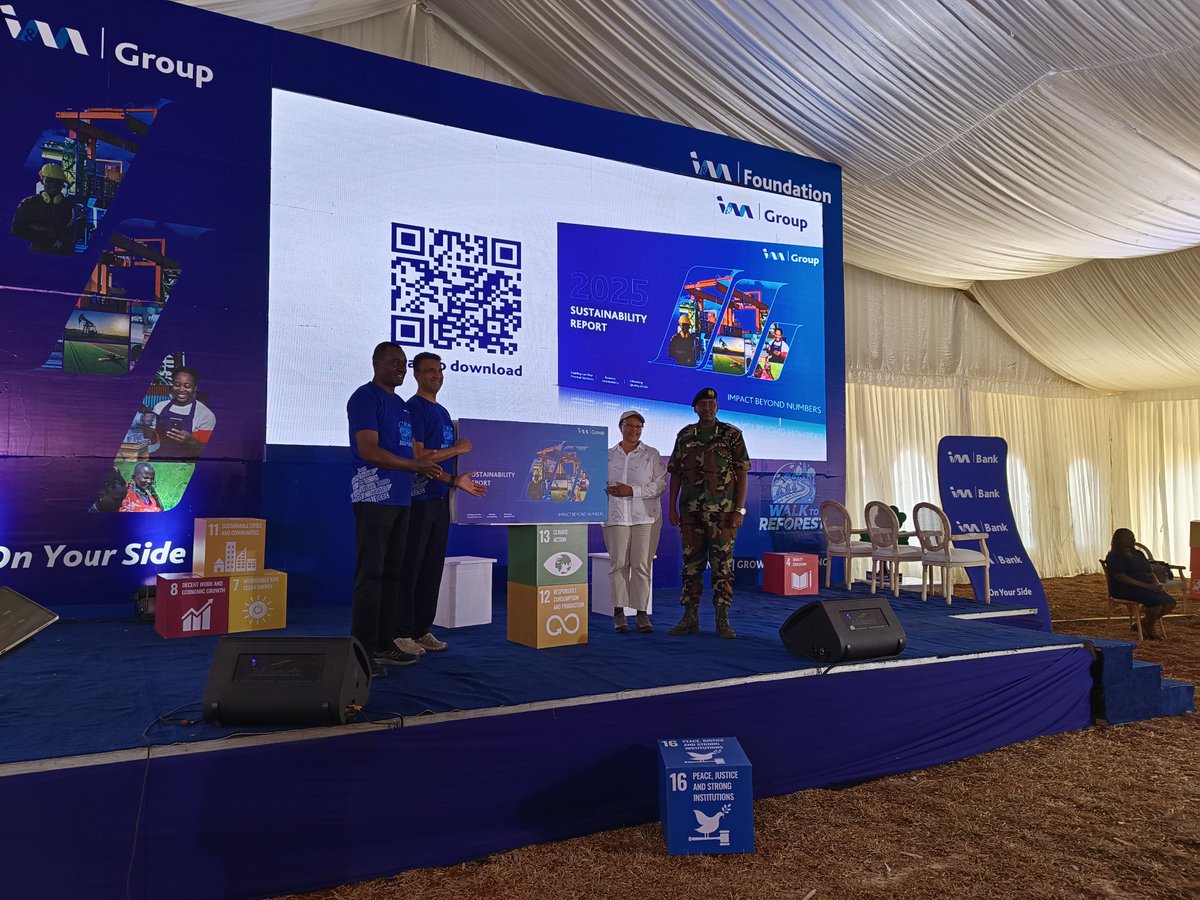
When I&M Group launched its 2025 Sustainability Report, it did so at the Ngong Road Forest Sanctuary rather than in a hotel conference room. Guests were invited on a community walk through the forest, framed around the idea that time in nature is its own form of medicine, before the formal presentation of results.
The theme of this year’s report, Impact Beyond Numbers, was chosen deliberately. The Group’s leadership was candid that reporting figures for their own sake means little without asking what those figures actually changed for the people and places behind them. It is a fair question for any sustainability report and Ngong Road Forest gives a concrete answer.
The restoration work sits inside the Group’s “Enhancing Quality of Life” pillar, one of three pillars anchoring its sustainability strategy alongside last-mile financial inclusion and building a more sustainable core business. Across its markets, the Group reports that its social investments reached more than 300,000 people over the past year, empowered over 38,000 women and youth and included the planting of more than a million trees.
What a safe forest could mean for Nairobi
Karura Forest offers a useful comparison. Once treated with similar caution, it now draws roughly 12,000 visitors a month after years of fencing, patrols and community investment. That is not a coincidence. It shows what happens when a city’s residents are given permission, in the form of safety, to actually use the green space around them.
Ngong Road Forest has the same potential. A secured, accessible forest on Nairobi’s southwestern edge could become a genuine recreation ground for the surrounding neighbourhoods: a place to run before work, walk with family on a Sunday, or simply get outside without needing to drive somewhere else to do it.
None of this replaces the need for more parks, better pavements and wider public investment in the city’s outdoor spaces. But it is a working example of what is possible when a financial institution treats an urban forest as core infrastructure for public wellness rather than a side project. For a city that has spent years losing green space rather than gaining it, that is worth paying attention to.