Kenya Startup Funding Slows to KES 16.3 Billion as NCBA Investment Bank Steps In
Kenyan startups raised KES 16.3 billion in the first half of 2026, a dip from KES 17 billion over the same period last year, according to new data from the Africa Venture Capital Association. The decline is modest on paper, but it has reopened a bigger conversation among investors about what founders actually need to raise money in a tighter market, and it is not just capital.
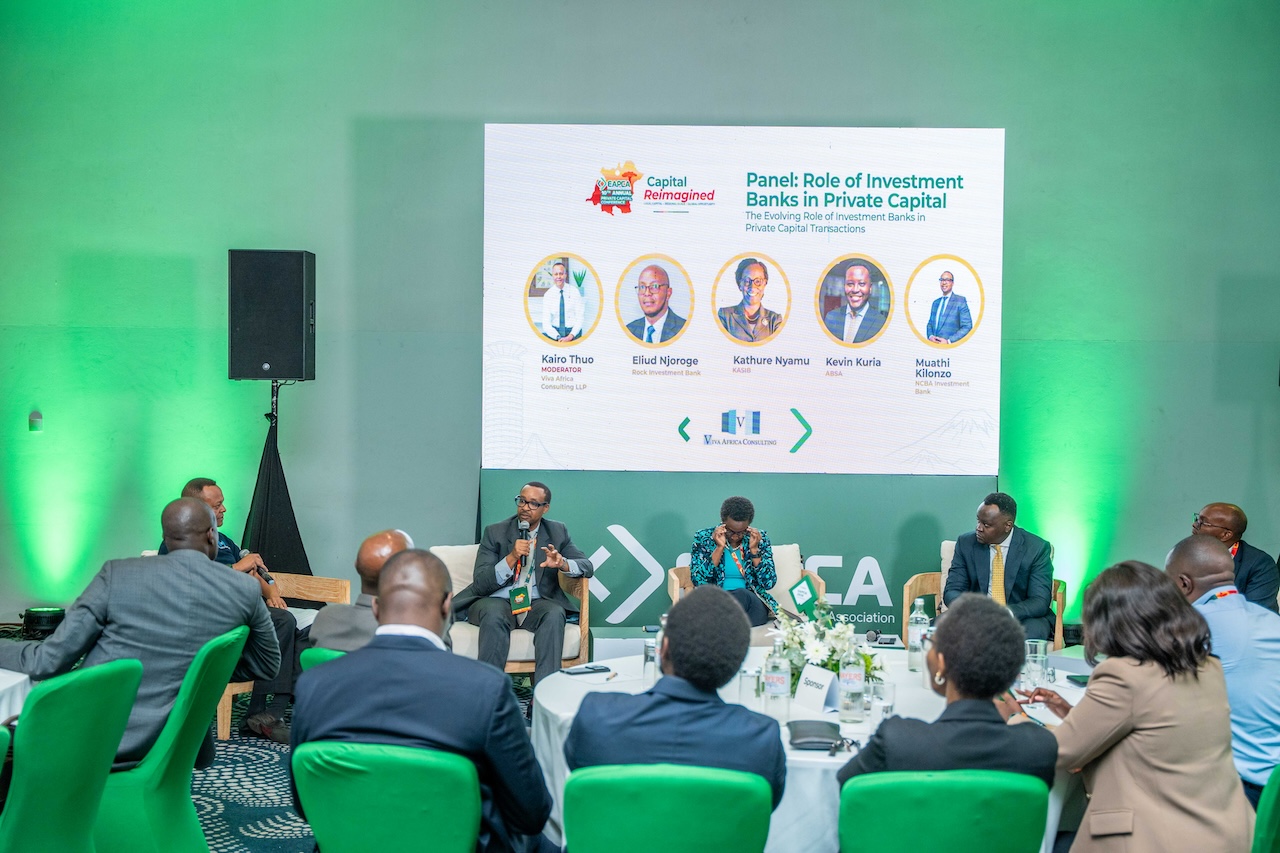
At the 10th EAVCA Annual Private Wealth Conference, investors, policymakers and business leaders spoke about a gap that rarely makes headlines: many startups are not struggling because the money does not exist, but because they are not prepared to receive it.
Muathi Kilonzo, Managing Director at NCBA Investment Bank, put it plainly. “The opportunity before us is to make the connection between capital and opportunity more efficient,” he said. “Institutional capital requires investable structures, credible projects, appropriate risk allocation and clear pathways to returns.”
Kilonzo pointed to NCBA Investment Bank’s own scale as evidence of what that advisory support can look like in practice. As the largest full-service investment bank in the region, NCBA Investment Bank has mobilized over KES 100 billion in assets under management, giving it the balance sheet and the track record to help startups and enterprises prepare for their next phase of growth. That combination of scale and hands-on advisory work is precisely what delegates said the market has been missing.
For founders, the distinction matters. Investment banks typically offer three things early-stage companies often lack in-house: due diligence support, valuation expertise, and help structuring a raise so it looks credible to institutional money. Delegates at the conference argued that closer relationships between startups and full-service banks like NCBA Investment Bank could shorten the distance between a good idea and a fundable one, and NCBA’s positioning at the conference signaled a bank actively building that bridge rather than waiting for it to form on its own.
PropertyDuka App: Kenya’s New AI Property Platform for Buying and Renting
Christine Maina, Chief Executive Officer of the East Africa Venture Capital Association, framed the moment as a turning point for the region rather than a setback. “As we mark 10 years as an association, we are looking ahead to strengthening domestic capital, accelerating regional integration and positioning East Africa to attract and deploy global investment at greater scale,” she said. “Private capital will be critical to financing entrepreneurship, infrastructure, innovation and economic resilience.”
For founders navigating a slower fundraising environment, the message from the conference was less about waiting out the dip and more about getting raise-ready, and about knowing which partners have the scale to help. Delegates pointed to a handful of priorities that could reshape how capital moves toward startups in the coming years, including guarantees and blended finance to share risk with investors, stronger local fund management capacity, clearer paths for investors to exit and recycle capital, and more aligned regulation to let capital move across East African borders.
None of these fixes happen overnight. But for a startup ecosystem trying to hold its ground at KES 16.3 billion, banks like NCBA Investment Bank positioning themselves as advisory partners rather than just capital providers is a notable shift. The conversation is no longer only about how much capital is out there. It is about whether the pipeline between that capital and the businesses that need it, including the institutions willing to build it, is strong enough to carry the next generation of Kenyan enterprises.