Equity Sustainability Report 2025: The Business Story
Equity’s 2025 sustainability report shows a record Ksh 99.5 billion in impact investment. Its 2030 targets show where the bank is heading next.
The Equity sustainability report for 2025 is out and its headline figure is a record. The Group invested Ksh 99.5 billion (US$771 million) in social impact and sustainability initiatives across its markets during the year, planted 9.1 million trees and supported 60,009 scholarships.
For business readers, the most telling part is what comes next.
Alongside the report, Equity Bank Kenya, the subsidiary behind most of the Group’s revenue, published a Sustainable Development Impact Disclosure. It sets out, in clear numbers, where the bank intends to lend between now and 2030.
Three sectors, one direction
By 2030, Equity wants MSMEs to make up 65% of its loan book, up from 56.6% in 2025 and 50.1% in 2023. Food and agriculture is set to reach 30% of lending, and manufacturing 15%.
These are the sectors that employ most Kenyans and produce most of what the country eats and sells. More credit flowing into them means more working capital for shop owners, transporters, farmers and small factories ready to expand.
The bank has also chosen to report its progress against these targets every year, covering negative impacts as well as positive ones. That puts its commitments firmly on the record.
Growth and impact in the same plan
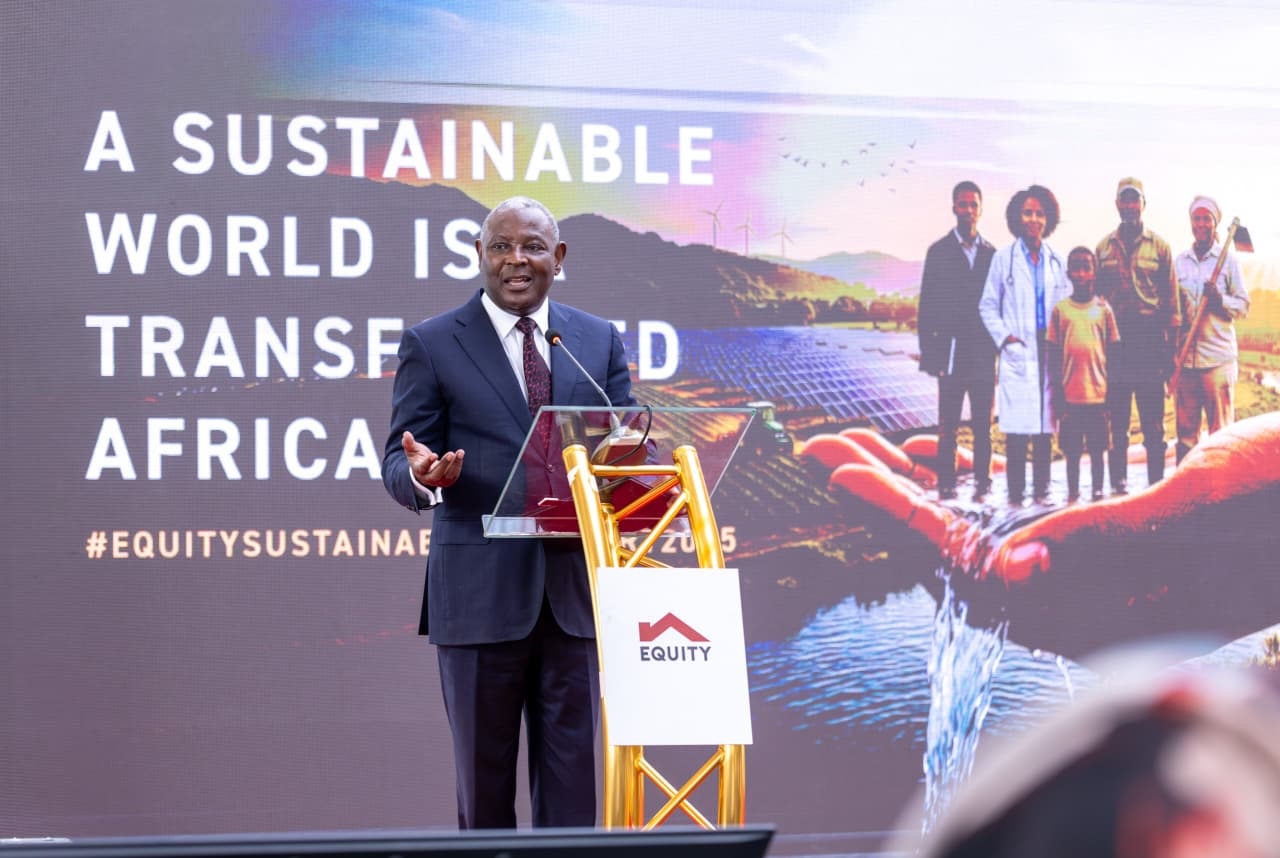
Dr James Mwangi, Equity Group’s Managing Director and CEO, describes commercial success and sustainable development as “mutually reinforcing drivers of long-term prosperity.”
The 2025 numbers make his case. Equity reported a profit after tax of Ksh 75.5 billion, up 55%, while disbursing Ksh 404 billion (US$3.11 billion) to MSMEs. It reached 622,525 small and medium-sized farmers through climate-smart financing and training. Lending to women rose to 23.9% of the Bank’s loan book, from 18% in 2023.
Put simply, the businesses Equity backs are the same ones growing its balance sheet.
Beyond the loan book
The same thinking runs through the Group’s wider work. Equity Afya now operates 150 outpatient medical centres across Kenya and the DRC. The Group facilitated 9,772 paid internships, and 415 young innovators moved into jobs after its 12-month tech apprenticeship. It also financed 115 refugees with Ksh 57.9 million in loans, giving them access to credit, not just aid.
Equity buys local too. In 2025, 90% of its procurement spending, Ksh 47.59 billion, went to local suppliers. For Kenyan firms that sell to large companies, that is a major buyer keeping its money close to home.
What the Equity sustainability report means for business owners
For SMEs, the message is practical. One of the region’s largest lenders has committed in writing to put more of its loan book in their hands, with farmers, agro-processors and manufacturers named as priorities.
Equity is also building climate and environmental risk screening into its credit decisions. Businesses investing in resilience, whether solar power, water efficiency or climate-smart farming, will find a lender that understands those plans.
Government sees a role for banks here too. Nasra Nanda, Built Environment Lead at the Executive Office of the President, said financial institutions “have a powerful role to play in making sustainable construction accessible.”
With its 2030 targets now public, Kenya’s small business owners know exactly where one of the country’s biggest banks wants to put its money next. For many of them, the next conversation with their bank could start on better terms.
Follow us on X, Instagram and Facebook for the latest stories, trends and updates from Nairobi and beyond.