Kenya Retailers Demand Crackdown on Illicit Trade
RETRAK wants authorities to target the suppliers, smugglers and financiers behind counterfeit goods as illicit trade continues to cost businesses and the government billions of shillings.
Kenya’s fight against illicit trade is facing renewed pressure, with retailers calling on enforcement agencies to stop concentrating on shop-level seizures and go after the networks responsible for supplying counterfeit, smuggled and untaxed products.
The Retail Trade Association of Kenya (RETRAK) wants the Kenya Revenue Authority (KRA), Anti-Counterfeit Authority (ACA), Kenya Bureau of Standards (KEBS) and National Police Service to adopt a coordinated enforcement strategy targeting the people behind illegal supply chains.
The association is also calling for a designated lead agency, clear investigation timelines and regular public updates on enforcement progress.
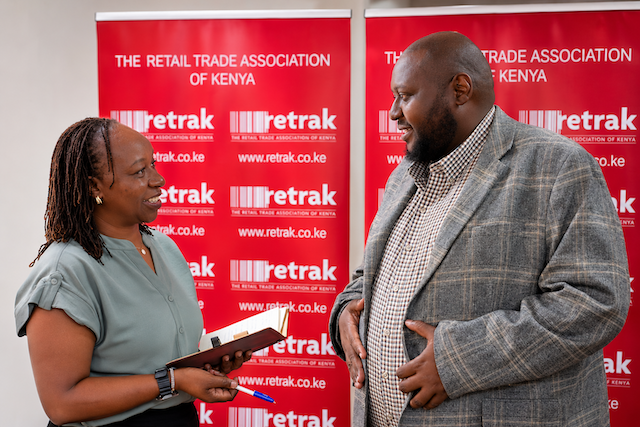
Speaking on Wednesday, November 11, 2026, RETRAK Chief Executive Officer Wambui Mbarire said removing illicit products from retail shelves addresses only one part of a much wider problem.
“Seizing illicit products from a shop is only the beginning. Investigators must establish who supplied the goods, where they were stored, who transported them and who financed the consignment. Following that trail is how we disrupt the networks and prevent the next delivery,” said Mbarire.
Illicit cigarettes and alcohol raise concern
The scale of illicit trade in Kenya is reflected in figures from industry studies and regulatory agencies.
A recent Kantar study estimates that illicit cigarettes accounted for 45.1% of Kenya’s cigarette market in 2025, compared with 34.1% in 2021. The estimated losses in excise duty and VAT reached KSh 10.2 billion in 2025, with cumulative losses of KSh 47 billion between 2021 and 2025.
The alcohol market faces similar challenges. Figures presented to Parliament by the Anti-Counterfeit Authority indicate that illicit alcohol accounts for approximately 59% of alcohol consumed in Kenya by volume. Its estimated economic cost stood at KSh 71 billion in 2022.
The ACA’s latest firm-level survey also found that counterfeit goods accounted for an average of 18% of products across the sectors surveyed. Motor vehicle spare parts recorded a 21% counterfeit rate, while alcoholic drinks stood at 19%.
These figures point to a problem affecting several sectors, from consumer goods and alcoholic beverages to the automotive industry.
Authorities report major seizures
Recent enforcement operations show that regulators are already dealing with significant volumes of illicit products.
The Anti-Counterfeit Authority seized counterfeit goods valued at more than KSh 563 million during the first three quarters of the 2025/26 financial year.
In July, the Kenya Revenue Authority destroyed fake and illicit goods worth KSh 218 million. The authority has also recently intercepted nearly 100 tonnes of smuggled sugar in Lodwar and Marsabit.
RETRAK, however, argues that seizures must lead to investigations that identify the people responsible for moving these products into the Kenyan market.
The association wants enforcement agencies to develop practical systems that allow retailers to verify excise stamps and product authentication marks. It is also calling for faster guidance when businesses encounter suspicious deliveries.
Another proposal involves creating safe and accessible reporting channels where shop employees and members of the public can flag suspected illicit products and receive feedback on the action taken.
Retailers say illicit trade puts legitimate businesses at risk
For retailers operating within the law, illicit goods create an uneven playing field.
Businesses that pay taxes, obtain the required licences and maintain proper records face competition from operators selling products that may have avoided taxes or entered the country through illegal channels.
Mbarire said legitimate retailers are increasingly exposed to unfair competition, while consumers face potential health and safety risks.
“Retailers who meet licensing requirements, keep proper records and source goods legitimately cannot compete fairly against operators supplied by smugglers, counterfeiters and tax evaders. Illicit trade undermines compliant businesses, puts jobs at risk and exposes consumers to dangerous products,” she said.
RETRAK also wants authorities to make enforcement results publicly available. This includes information on investigations into major suppliers, prosecutions and the recovery of unpaid taxes.
The association believes regular reporting would help Kenyans understand whether enforcement operations are reaching the people behind illicit supply chains.
“We need an accountable, sustained response not isolated raids. Kenyans deserve to know whether investigations are reaching the sources of illicit products and whether offenders are being brought to justice,” Mbarire added.
RETRAK calls for stronger retailer accountability
While calling for tougher enforcement, the association acknowledges that retailers also have a responsibility to prevent illicit products from entering their businesses.
It is urging members to conduct proper checks on suppliers, retain purchase invoices and reject products whose origins cannot be verified.
RETRAK has also expressed its willingness to work with regulators and enforcement agencies to develop practical compliance guidelines and awareness programmes targeting businesses of different sizes, including small traders.
The association says the consequences of illicit trade extend beyond lost government revenue and unfair competition.
Counterfeit alcohol can expose consumers to serious health risks, while fake vehicle spare parts can compromise road safety and put lives in danger.
“This is more than lost revenue or unfair competition. Counterfeit alcohol can threaten lives, and fake vehicle parts can cause serious harm. Tackling illicit trade protects consumers, legitimate businesses, jobs and public finances,” Mbarire concluded.
The latest call puts pressure on Kenya’s enforcement agencies to demonstrate how their operations are disrupting the supply chains behind illicit goods, rather than simply removing products from shops.
Follow us on X, Instagram and Facebook for the latest stories, trends and updates from Nairobi and beyond.