KPC Inuka Tech Fellowship Graduates 45 Young Kenyans
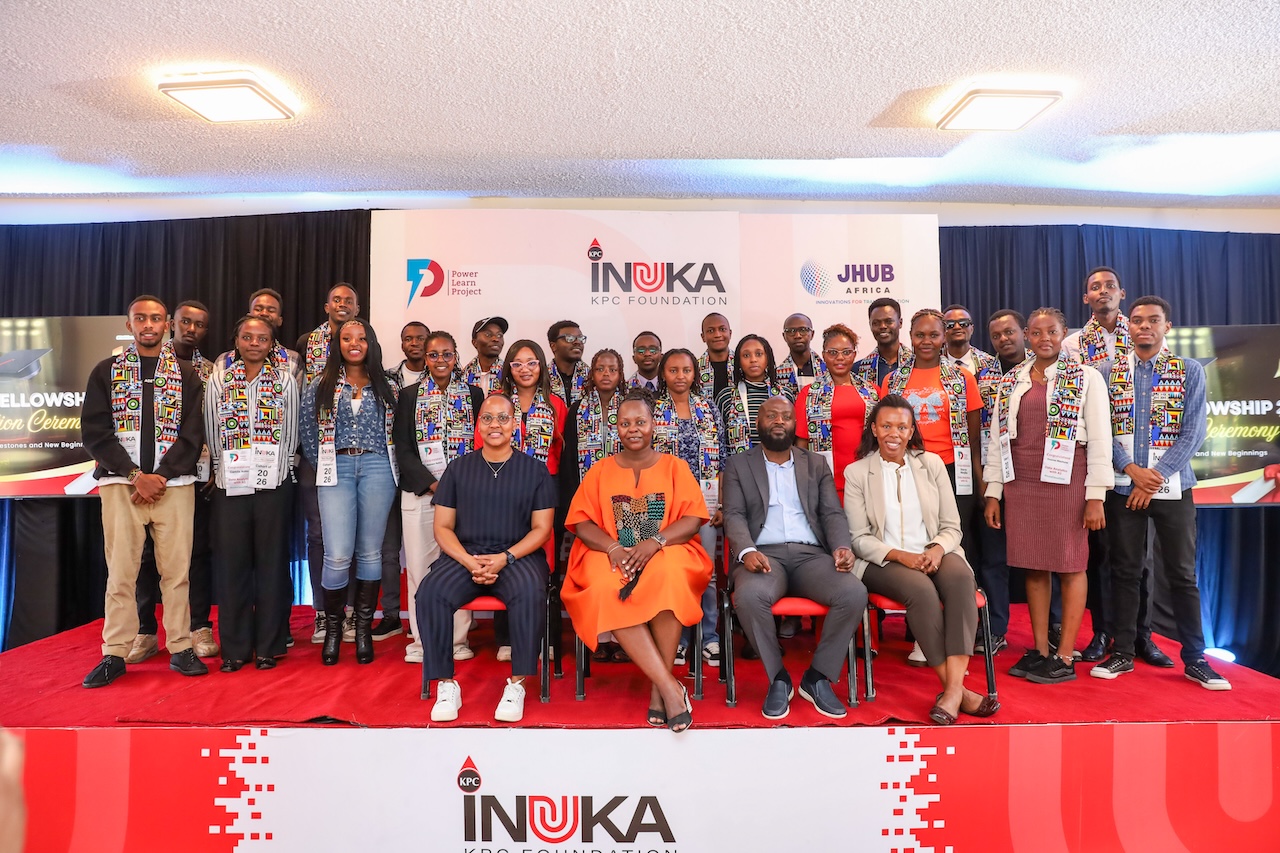
Forty-five young Kenyans have graduated from the inaugural Kenya Pipeline Company (KPC) Inuka Tech Fellowship, with 60% of participants already securing employment after completing the six-month programme.
The fellowship, implemented through KPC’s philanthropic arm, the KPC Foundation, was designed to equip young people with practical technology skills and connect them to employment and entrepreneurship opportunities.
The programme was delivered in partnership with Power Learn Project (PLP) and Jomo Kenyatta University of Agriculture and Technology (JKUAT) through JHUB Africa.
Selected from more than 1,000 applicants, the inaugural cohort had equal female representation, with women accounting for 50% of participants.
Training covered Python, machine learning, dashboard development, automation tools, data storytelling and fibre optic technology. Participants also received globally recognised certifications, mentorship and exposure to industry environments.
Beyond employment, the programme has also opened opportunities for entrepreneurship. A team of five graduates is currently in discussions with Family Bank to commercialise a digital solution developed during the fellowship.
Speaking during the graduation ceremony at KPC headquarters in Nairobi, KPC Foundation Manager Rachel Gathoni said the programme was already demonstrating the value of linking technical training to real employment opportunities.
“Beyond equipping young people with technical skills, the Inuka Tech Fellowship has demonstrated the value of connecting training to real opportunities. We are encouraged by the progress of the 45 graduates, with many already securing employment, progressing to attachments and apprenticeships or pursuing opportunities to commercialise their ideas,” said Gathoni.
She added that the Foundation would focus on strengthening industry partnerships to help graduates transition into sustainable careers.
Mumbi Ndung’u, Executive Director and Founder of Power Learn Project, said practical technology skills were increasingly important in preparing young people for opportunities in the global economy.
She noted that the programme was designed to help participants develop careers, build technology solutions and create opportunities within their communities.
At JHUB Africa, the emphasis was on translating classroom learning into practical industry experience.
Dr Lawrence Nderu of JHUB Africa highlighted that all 15 fellows in the fibre optic training cohort had secured industry placements.
He said industry exposure was an important step in helping graduates build practical competence, confidence and the experience needed to pursue long-term careers.
Representing the KPC Foundation Board of Trustees, Zilper Abong’o, General Manager for Strategy and Commercial Services, said the fellowship was part of the Foundation’s long-term investment in human capital.
According to Abong’o, the programme seeks to address the gap between technical training and industry requirements while supporting Kenya’s digital transformation.
The Foundation plans to expand the programme through two main pathways. The first will support graduates interested in entrepreneurship and commercialising solutions developed during the fellowship. The second will focus on employment opportunities through stronger industry partnerships.
KPC Foundation is also engaging prospective partners, including Family Bank Foundation, to support the programme’s expansion.
The next cohort is expected to be announced in the coming weeks.
For Kenya’s growing technology sector, the programme offers an example of how partnerships between industry, educational institutions and technology organisations can help young people move from training into employment, while creating room for locally developed digital solutions.
Follow us on X, Instagram and Facebook for the latest stories, trends and updates from Nairobi and beyond.