
AERC Workshop Examines Africa’s Economic Future
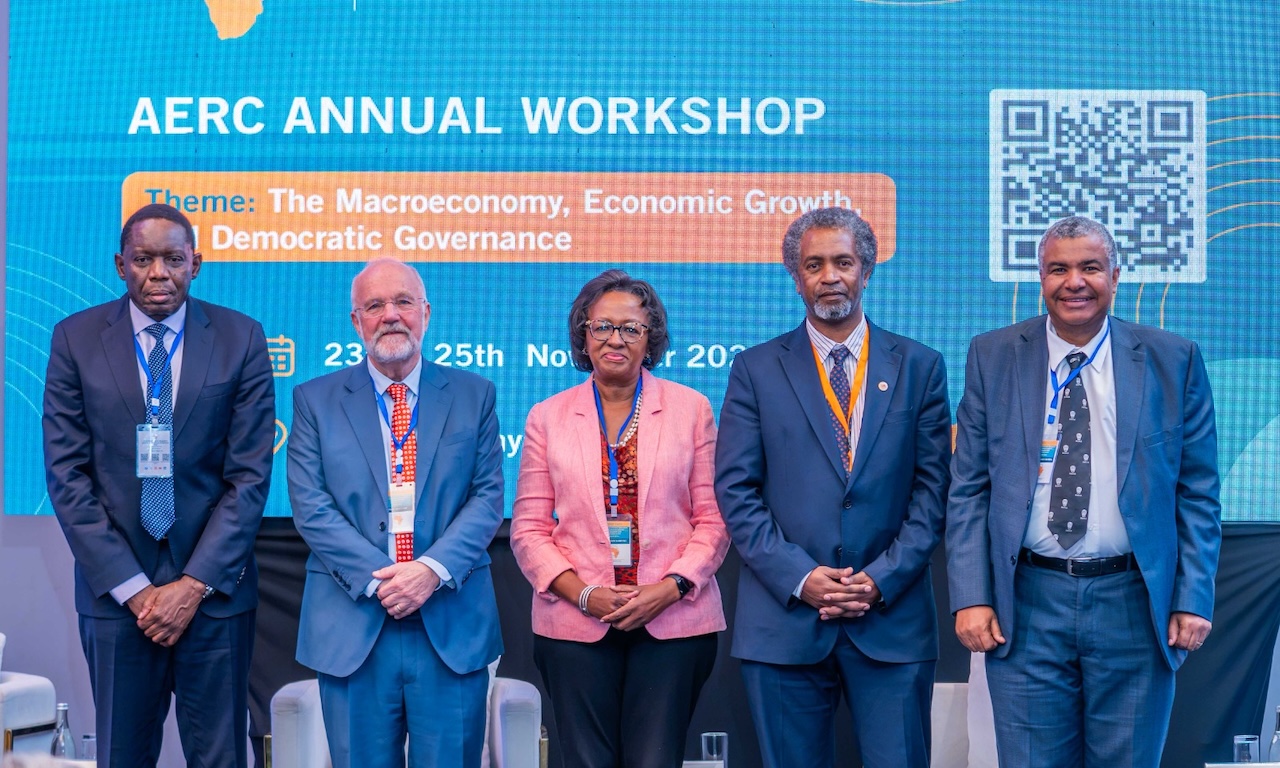
The 2026 Annual Workshop is examining how African countries can sustain economic growth, strengthen democratic governance and respond to shrinking foreign aid.
African economies are facing a difficult balancing act. Governments must protect economic growth, create jobs and fund public services while dealing with climate shocks, tighter budgets and declining development assistance.
These pressures took centre stage on Monday, November 23, as the African Economic Research Consortium (AERC) opened its 2026 Annual Workshop, bringing together 2,969 registered participants from 68 countries.
Held under the theme The Macroeconomy, Economic Growth, and Democratic Governance, the workshop is examining how African countries can build stronger economies while maintaining accountable institutions and protecting development priorities.
A major concern running through the discussions is the declining availability of Official Development Assistance (ODA). With external financing becoming less reliable, African governments are under growing pressure to strengthen domestic revenue collection, improve public financial management and make better use of available resources.
Dr Adelaide Matlanyane, Lesotho’s Minister of Finance and Development Planning and an AERC Board Member, opened the workshop with an assessment of the continent’s economic outlook.
She noted that sub-Saharan Africa is expected to record economic growth of 4.5%, while pointing to Lesotho’s 2026–2027 budget as an example of efforts to strengthen economic resilience.
Lesotho’s approach includes shifting towards private sector-led growth, improving public financial management and expanding domestic resource mobilisation.
Matlanyane argued that macroeconomic stability creates the conditions for economic growth, allowing governments to generate resources that can improve people’s lives.
However, she raised a question that is particularly relevant to African countries facing increasingly unpredictable climate conditions: how can governments with limited fiscal space protect development priorities during climate shocks?
Central bank stability remains central to growth
Central Bank of Kenya Governor Dr Kamau Thugge, who attended as Guest of Honour, reinforced the importance of macroeconomic stability in supporting sustained economic growth.
He highlighted the challenges facing monetary policymakers as they respond to an increasingly uncertain global economic environment.
Using Kenya as an example, Thugge noted that the economy had demonstrated resilience despite recent shocks, recording average growth of approximately 5% between 2022 and 2025.
He also recognised AERC’s contribution to economic research and capacity building, particularly its work supporting professionals within central banks.
According to Thugge, the Central Bank of Kenya has benefited from the consortium’s research and capacity-building programmes, with several of its staff members having participated in its initiatives.
His remarks highlighted the connection between economic research, informed policymaking and the institutions responsible for maintaining financial stability.
AERC turns attention to research, AI and institutional capacity
AERC Acting Executive Director Dr Abbi Kedir outlined the organisation’s priorities, including new programmes designed to strengthen central bank capacity and explore the future of economics in the age of artificial intelligence.
He highlighted the importance of partnerships with institutions such as the African Capacity Building Foundation, World Bank and African Development Bank in supporting the consortium’s work.
The discussions are also expected to address research governance, economics, funding and new programmes supporting thematic researchers and their mentors.
The growing role of artificial intelligence in economic research adds another dimension to the conversation, particularly as African institutions consider how emerging technologies could influence economic analysis and policymaking.
Foreign aid, jobs and climate change dominate development debate
Another major discussion centred on Africa’s long-term development priorities.
Prof. Finn Tarp of the University of Copenhagen delivered a presentation titled Navigating Africa’s Development Challenges, chaired by Mukami Kariuki, Regional Hub Manager in the Africa Finance and Economics (AFE) Region at the World Bank Group.
The session examined several issues shaping the continent’s economic direction, including foreign aid, employment, industrial policy, climate change, macroeconomic management, domestic resource mobilisation and tax reform.
Participants considered areas where economic research has established clear evidence and others where significant policy questions remain unanswered.
The discussions also explored how African countries can protect democratic principles, strengthen domestic economic resilience and reconsider their international partnerships as traditional sources of development financing change.
For African governments, the challenge is increasingly about making difficult policy choices with limited resources while maintaining public confidence in institutions.
The AERC 2026 Annual Workshop provides a platform for researchers, policymakers and development partners to examine these questions and translate economic research into practical policy recommendations.
As the discussions continue, the focus remains on how African countries can build resilient economies, expand opportunities for their populations and maintain accountable governance in an increasingly uncertain global economy.
Stay connected with Nairobi Lifestyle. Follow us on X, Instagram and Facebook for the latest stories, trends and updates from Nairobi and beyond.