Safaricom’s Sustainable Impact Surpasses Kshs. 1 Trillion in FY25
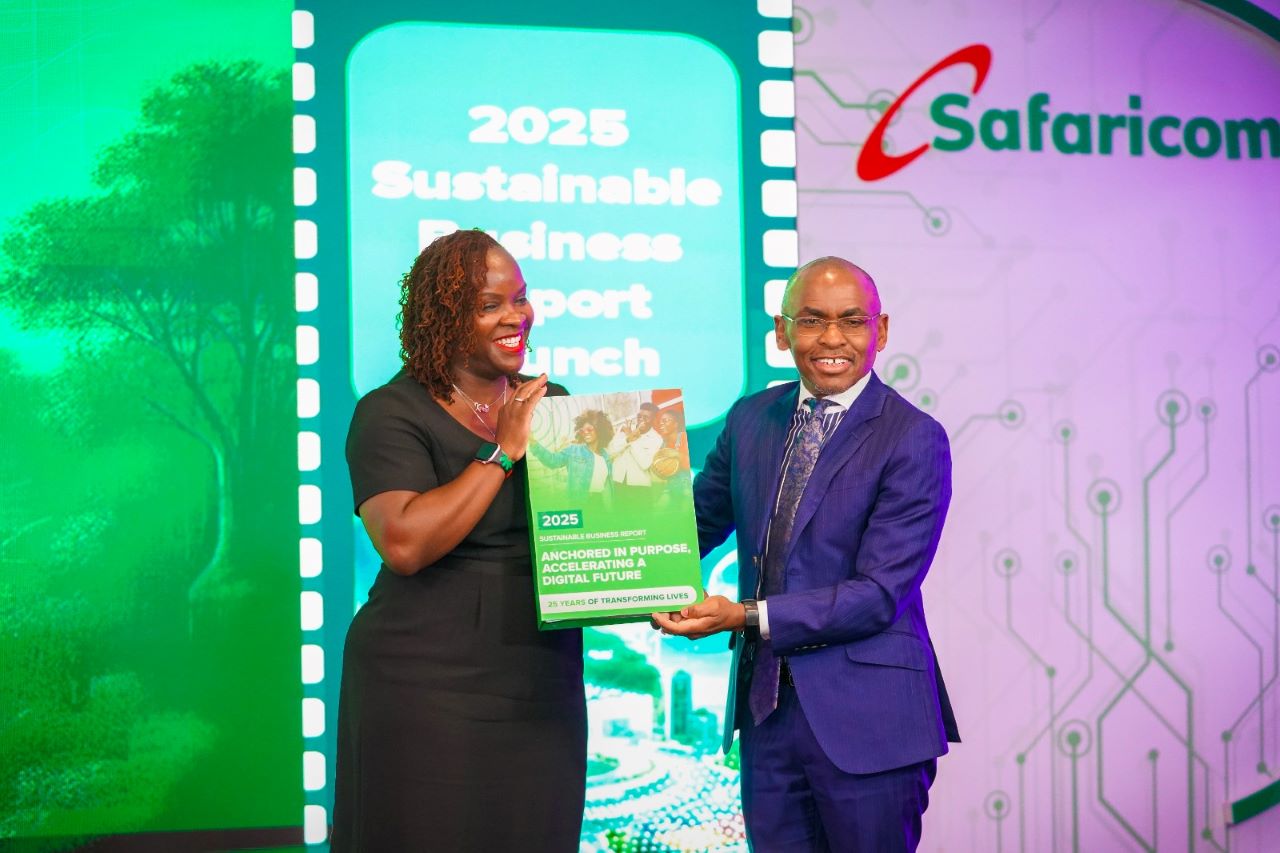
Safaricom’s Economic, Social, and Environmental Impact Hits Kshs. 1.1 Trillion in FY25
Safaricom (NSE: SCOM) has announced a True Value impact of Kshs. 1.1 trillion, according to its 2025 Sustainable Business Report. The milestone marks a 16-fold increase compared to the company’s financial profit, underlining its far-reaching economic, social, and environmental contributions.
The report also reveals that Safaricom contributed Kshs. 809 billion to Kenya’s GDP through its operations, with growth largely driven by the value created for customers, agents, and merchants through M-PESA, increased corporate social investment, and higher economic impact from capital and operational expenditure.
True Value measures a company’s total impact beyond financial returns—capturing economic, social, and environmental contributions, both positive and negative. This holistic assessment helps businesses understand how to create value for both shareholders and society while strengthening stakeholder relationships and driving long-term sustainability.
“Over the past 25 years, Safaricom has evolved into a purpose-led technology company guided by one mission: to transform lives by connecting people to people, people to opportunity, and people to information. At the heart of this journey is sustainability—embedded not as an obligation, but as a business imperative,” said Dr. Peter Ndegwa, CEO, Safaricom PLC.
“Now in our 14th year of publishing the Sustainable Business Report, we continue to hold ourselves accountable, using the Sustainable Development Goals as our blueprint for impact.”
This year’s report, themed “Anchored on Purpose, Accelerating a Digital Future,” highlights how Safaricom continues to leverage innovation, technology, and partnerships to create meaningful impact—enhancing education, improving healthcare, connecting communities, and deepening financial inclusion.

Key Highlights from the 2025 Sustainable Business Report
Environment
Planted 830,000 trees and restored 694 hectares across 8 counties, engaging over 4,000 community members.
Cumulatively grown 2.3 million trees toward a target of 5 million by 2030.
Achieved CDP A-list recognition for Climate Change and Supplier Engagement.
Recycled 99% of operational waste, including 190 tons of e-waste and 62 tons of plastic through M-PESA Green Points.
Fenced 15 km of Kakamega Forest.
Social Impact
Digital Inclusion
Growth in smartphones on the network from 22.93 million to 27.37 million.
Supported 9 early-stage startups through the Spark Fund Accelerator Programme.
Digifarm
Disbursed Kshs. 945 million in credit across 169,000 loans, giving farmers access to inputs and services.
36% of recipients were women and 17% were youth.
Smartphone ownership rose from 44% to 50%, driven by the Lipa Mdogo Mdogo program.
Diversity, Equity & Inclusion
49% female and 51% male representation across the workforce.
45% of leadership positions held by women.
3.6% of staff are persons with disabilities.
AI for Customer Experience
AI-driven personalization led to a 15.2% year-on-year growth in mobile data revenue and a 14% increase in data usage per customer.
Governance
Awarded ISO 27701 certification for Privacy Information Management Systems, demonstrating its commitment to protecting customer data across GSM and M-PESA services.
Enhanced transparency with the inclusion of IFRS disclosures alongside GRI standards.
Achieved 87% fraud reduction using AI-based fraud detection.
Anti-money laundering systems detected and reported 14 poaching-related transactions to the Financial Reporting Centre.