
Samsung Galaxy S26 Series First Impressions in Kenya
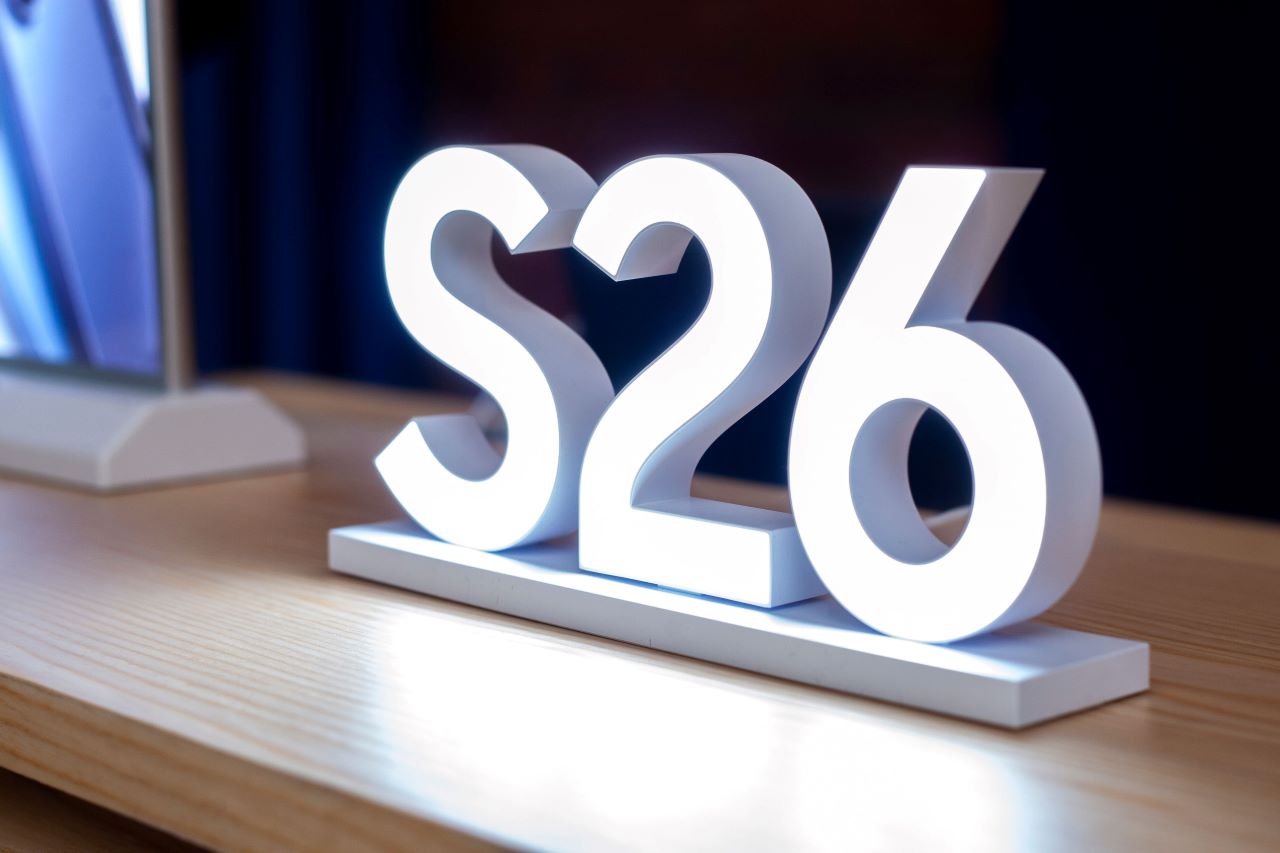
Samsung Galaxy S26 Series First Impressions: A Smarter, More Refined Flagship
Last week, Samsung launched its newest S generation with the flagship Galaxy S26 series. With the new lineup, it quickly became clear that the company is leaning into careful design and software refinements rather than dramatic hardware changes.
The Galaxy S26 series includes the Galaxy S26, Galaxy S26 Plus, and Galaxy S26 Ultra. While there are a few hardware upgrades, the bigger focus this year is Artificial Intelligence and how AI-powered tools integrate into everyday smartphone use.
I had the chance to interact with the new devices during the Kenyan launch event, and here are my first impressions.
Design
Visually, the S26 Ultra carries forward the design identity of the S25 Ultra. It features flat glass panels on the front and back with a metal frame and slightly curved corners that make it easier to handle.
The familiar Galaxy flagship feel is still there the moment you pick it up.
There are a few noticeable tweaks though. The S26 Ultra is thinner and lighter at 7.9mm, and the curved corners are now more rounded compared to previous models that leaned toward sharper, boxier edges.
The camera island also takes inspiration from the S25 Edge, appearing slightly raised instead of the cleaner lens layout seen on the S25 Ultra. Personally, I prefer this look, though it does make the phone wobble more when placed on a table.
Samsung has also switched back to aluminium from titanium for the frame. According to the company, aluminium absorbs impact better, which may help improve durability.
Across the rest of the lineup, Samsung has adopted a more unified design language. The entry-level S26 now resembles a smaller version of the S26 Ultra, giving the entire flagship range a consistent visual identity.
Performance
Samsung took a slightly different approach this year when it comes to processors.
The Galaxy S26 Ultra is powered globally by the Qualcomm Snapdragon 8 Elite Gen 5 for Galaxy, meaning Kenyan users will get the customized Qualcomm chipset.
Meanwhile, the Galaxy S26 and S26 Plus run on the Exynos 2600 in many markets, including Kenya.
The Snapdragon variant features slightly higher clock speeds for improved CPU and GPU performance. On the other hand, the Exynos 2600 is built on a 2-nanometer process and uses new ARM-designed cores focused on efficiency while delivering stronger AI processing and graphics gains.
During my brief hands-on session, the phones felt noticeably fast. App switching was smooth, animations were fluid, and the overall interface felt polished.
For most everyday users, the performance differences between the processors will likely be difficult to notice.
Software
Software is clearly where Samsung is putting most of its energy with the S26 series.
All models ship with One UI 8.5 based on Android 16, bringing expanded Samsung AI features to the forefront.
Some of these tools build on features already available on Galaxy devices but with deeper intelligence.
The Photo Assist editor now understands natural language commands. Instead of manually selecting tools, you can simply describe what you want changed in an image.
Samsung has also improved Screenshot Search. The phone can analyze saved screenshots and retrieve them through content recognition rather than file names, which will be particularly useful for users who capture screenshots frequently.
For movie lovers, the Audio Eraser feature now works beyond the camera app and extends to certain third-party apps like Netflix and YouTube, reducing background noise so dialogue becomes clearer.
Another notable addition is Now Nudge, Samsung’s new contextual AI feature. It monitors what you are doing on screen and suggests actions accordingly. For example, if you’re planning something in a chat thread, it can suggest adding a calendar event.
Most of this processing happens on-device, which is an interesting shift in how digital assistants behave. Instead of waiting for commands, the phone reacts to context.
It will be interesting to see whether users are comfortable with this level of awareness from their smartphones.
A Screen With Built-In Privacy
Samsung also introduced a new Privacy Display feature, exclusive to the S26 Ultra.
This technology combines hardware and software adjustments on the OLED screen to limit visibility from side angles, preventing people nearby from seeing what’s on your display.
When Privacy Display mode is activated, the screen becomes readable only when viewed directly from the front. Samsung achieves this by selectively disabling pixels that spread light widely and relying on those that project light forward.
It is a feature that could be particularly useful in public settings like crowded matatus, elevators, or queues where people often glance at nearby screens.
Cameras
Camera upgrades on the S26 series are relatively modest.
The S26 Ultra still uses a 200MP main sensor, but it now features a wider f/1.4 aperture to improve low-light performance.
The 5X telephoto lens also receives a wider aperture to enhance zoom photography in darker environments.
In my quick tests, this improvement was noticeable in the sample shots.
For video, the Ultra now supports the APV video standard and allows recording directly to external storage devices. Samsung has also introduced a new stabilization mode that uses real-time motion data to keep the horizon level even as the phone rotates.
I only captured a few samples during the launch, but I’m looking forward to testing the cameras further once the devices officially arrive in Kenya.
Battery
Samsung kept the 5000mAh battery on the S26 Ultra but improved charging speeds.
The phone now supports 60W wired charging and 25W wireless charging. Samsung says the device can charge from 0 to 70 percent in about 30 minutes, which will be interesting to test in real-world use.
Pricing in Kenya
Samsung opened preorders during the launch event, with availability starting 11 March in Kenya.
Pricing is as follows:
Galaxy S26 Ultra
256GB – Ksh 171,400
512GB – Ksh 197,300
Galaxy S26 Plus
256GB – Ksh 144,400
512GB – Ksh 170,300
Galaxy S26
256GB – Ksh 120,900
512GB – Ksh 141,700
Early Verdict
After spending time with the Galaxy S26 series at the Kenyan launch event, the biggest takeaway is that Samsung is refining an already successful flagship formula rather than reinventing it.
In the past, the Galaxy S lineup often served as a stage for the most ambitious hardware innovations in the Android world. With the S26 generation, Samsung appears to be shifting strategy.
The company is betting that software intelligence and AI features matter more than raw hardware specifications.
That approach could prove successful. At the same time, it also puts the success of the S26 series on something harder to measure than battery size or megapixels: whether people will still find these AI features genuinely useful once the excitement of launch week fades.


