Samsung Marks 20 Years as the World’s No.1 TV Brand
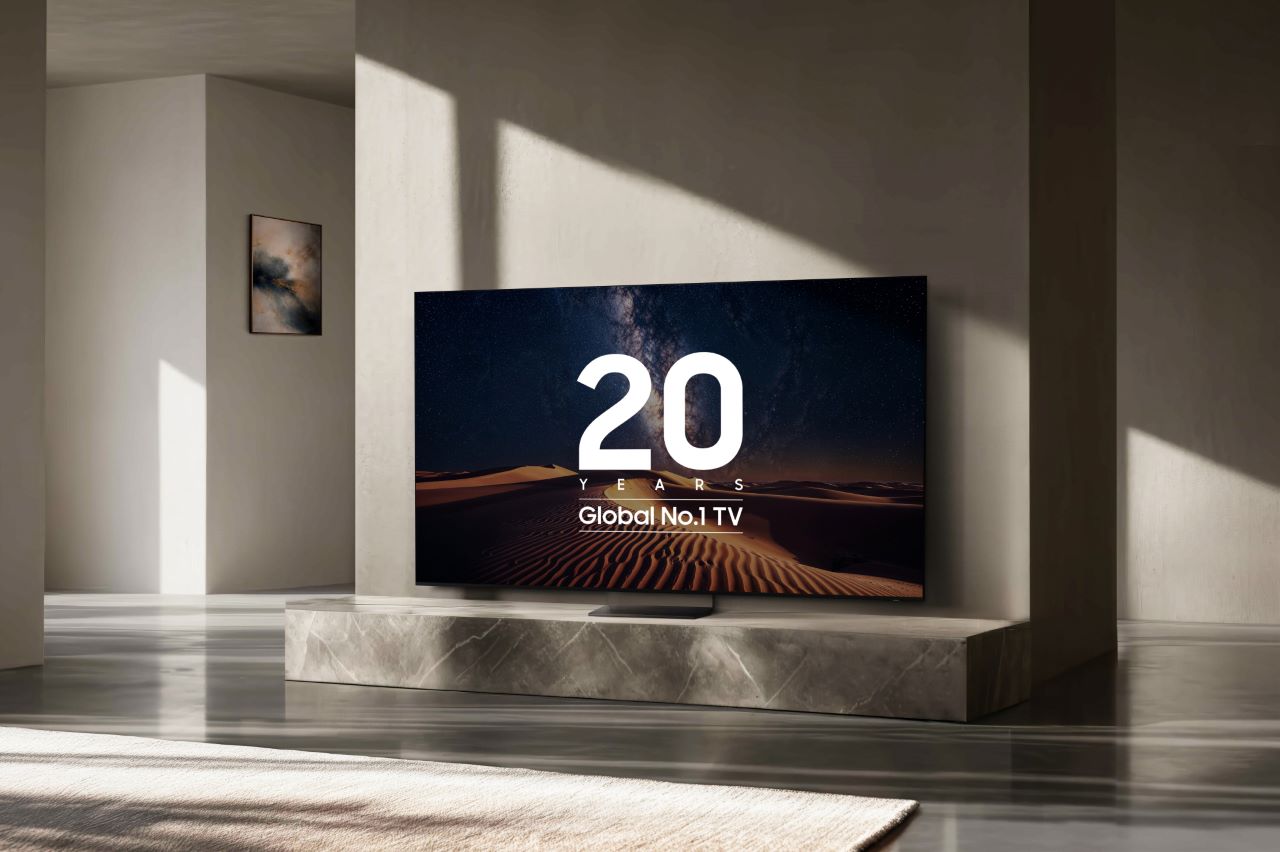
Samsung Marks 20 Consecutive Years as the World’s No.1 TV Brand
Samsung has held the top position in the global TV market every year since 2006
Samsung Electronics has marked a major milestone in the global television industry, maintaining its position as the world’s leading TV brand for 20 consecutive years.
The company has led the global TV market every year since 2006. According to data from Omdia, Samsung held a 29.1% share of the global TV market in 2025, underscoring its continued dominance in the sector.
Samsung’s leadership is particularly strong in the premium television category. In TVs priced above $2,500, the company captured 54.3% of the market, driven largely by demand for its Neo QLED, OLED, and lifestyle TV ranges.
It also maintained a commanding position in televisions priced above $1,500, where it held a 52.2% market share.
“When consumers choose a TV, they’re choosing a brand they can trust for years to come,” said SW Yong, President and Head of the Visual Display Business at Samsung Electronics. “Our 20-year leadership in the global TV market reflects that trust, built on decades of engineering excellence and premium innovation.”
Also read: Samsung Galaxy S26 Ultra Wins Best in Show at MWC 2026
Two Decades of TV Innovation
Samsung first rose to the top of the TV market in 2006 with the launch of its design-focused Bordeaux TV, a model that helped redefine television aesthetics at the time.
Over the years, the company has introduced several technologies that reshaped the modern television experience:
2009: Samsung accelerated the global shift to LED TVs, helping establish slimmer and more energy-efficient displays.
2011: The launch of Smart TVs transformed televisions into connected entertainment hubs capable of streaming, apps, and internet services.
2015: Samsung introduced The Serif, a design-driven television that blended home décor with display technology.
2017: The company launched The Frame, pioneering the Art TV category by allowing users to display digital artwork when the TV is not in use.
2017: Samsung also introduced QLED TVs powered by quantum dot technology, raising the benchmark for premium picture quality.
2018: The debut of 8K televisions delivered over 33 million pixels, quadrupling the resolution of 4K displays.
2020: Samsung unveiled MICRO LED technology, advancing self-emissive display technology and setting new standards for brightness, contrast, and color accuracy.
Through these innovations, Samsung has played a central role in shaping today’s premium television standards, particularly in picture quality, smart functionality, and display design.
Expanding Next-Generation TV Technology
Samsung continues to strengthen its leadership in premium and next-generation televisions by expanding its lineup across multiple display technologies.
The company is introducing Micro RGB models as part of its next phase of display innovation while also expanding its OLED and Neo QLED portfolios. These models focus on delivering improved picture performance, larger screen sizes, and advanced display processing.
Samsung is also widening its Mini LED offerings, bringing enhanced brightness, contrast, and precision control to more screen sizes and price segments.
At the same time, the company is investing heavily in AI-powered televisions, where advanced processors optimize picture quality, sound performance, and personalized viewing experiences in real time.
With two decades of leadership in the global TV market, Samsung continues to position itself as one of the most trusted television brands worldwide, offering technologies that span entry-level to ultra-premium screens.