The face looks familiar, the voice sounds real, but the Safaricom offer may be a deepfake
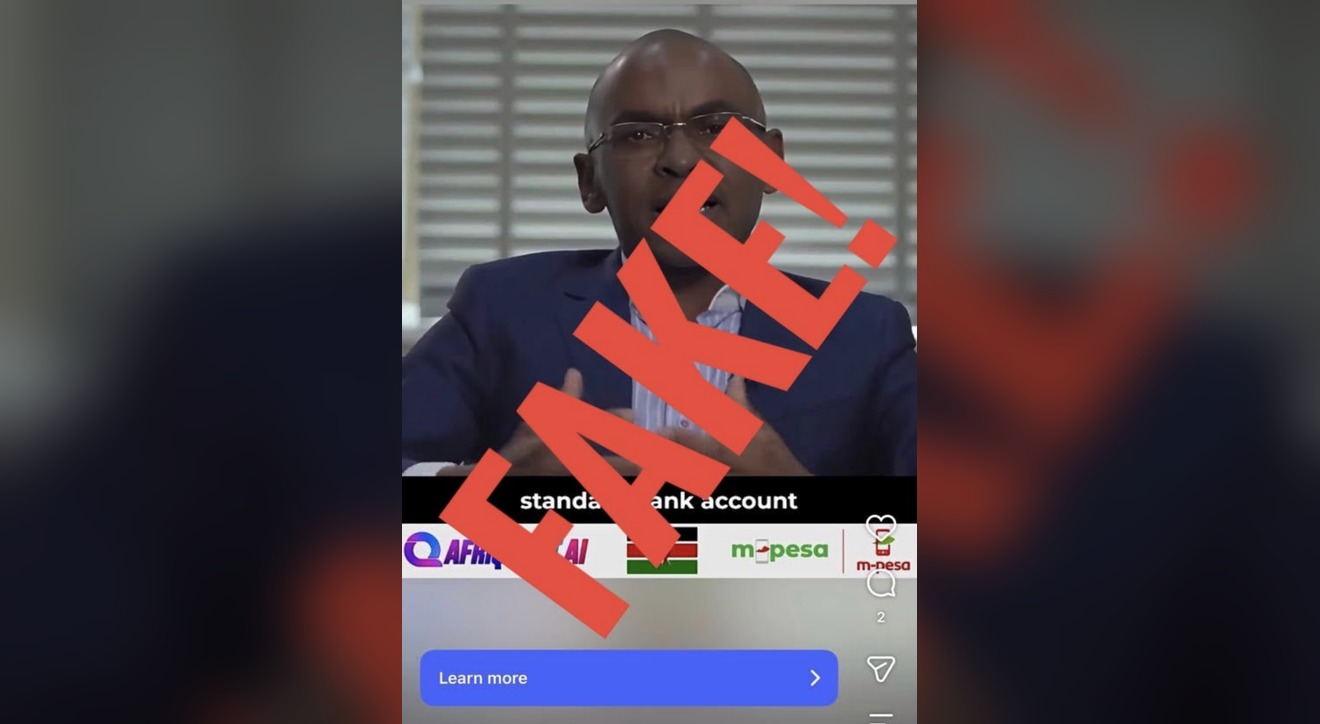
A video circulating online appears to show Safaricom Group CEO Peter Ndegwa promoting an offer to customers. It carries familiar branding and looks like the kind of announcement that might appear in a genuine company campaign. There is one problem: the video is fake.
The manipulated advert is an example of how generative artificial intelligence is changing online fraud. Tools that can reproduce a person’s appearance or imitate their voice give scammers new ways to make fabricated promotions appear credible.
For customers, the danger is not simply that a video may contain artificial images. It is that the video can become the first step in a carefully constructed attempt to obtain money or personal information.
A customer might see an advert promising a cash reward, free airtime or a special promotion. A link then leads to a website designed to resemble an official Safaricom page. The page may request a phone number, identification details or an M-PESA PIN. A follow-up message or phone call can add pressure, making the offer seem even more convincing.
The familiar face is being used to establish trust before the customer has had a chance to question the offer.
When your eyes and ears are not enough
There are clues that a video may have been manipulated. The speaker’s mouth might not move in time with the words. Facial expressions may look unnatural, while the voice may have unusual pauses, a flat tone or inconsistent pitch.
But these signs are not a reliable test. Some manipulated videos can look convincing, while poor-quality audio or unusual facial movements do not automatically mean a video is fake.
A recognisable face, a familiar voice, a Safaricom logo or thousands of social media views also cannot establish that an offer is genuine. Fraudsters can copy branding and manufacture the appearance of public approval.
The safer approach is to question the offer itself. Is it promising an unusually large reward? Does it require immediate action? Is it asking for a payment or confidential information before you can claim something?
Simama, Fikiri, Hakiki
Safaricom’s #JiulizeKamaNiUkweli campaign encourages customers to make verification a habit through three simple steps.
Simama (Stop): Do not rush because an advert says an offer expires soon or an unfamiliar caller insists you must act immediately. Pause before clicking, paying or sharing information.
Fikiri (Think): Examine the promise and the request being made. Be cautious of giveaways, investment returns or promotions that sound unusually generous. Look at the video and website for warning signs, but do not rely on appearance alone.
Hakiki (Verify): Check the offer independently through Safaricom’s official website, *334#, My OneApp or the M-PESA app. You can also check its verified social media accounts. Do not use a link or telephone number supplied in a suspicious advert as your only means of confirmation.
Safaricom has repeatedly warned customers never to disclose their M-PESA PIN. A person claiming to represent the company should not need it to help you claim a promotion.
If you receive a suspicious message, forward it to 333 for reporting. If you have already shared sensitive information or authorised a suspicious transaction, contact Safaricom through an official customer care channel immediately.
AI-generated videos may become harder to distinguish from genuine recordings. That makes independent verification more important than trying to become an expert at spotting visual errors.
Before trusting the next familiar face on your screen, ask one question: is the offer real and where can I confirm it?
Follow us on X, Instagram and Facebook for the latest stories, trends and updates from Nairobi and beyond.