Ambitious SGR Rail Extension to Boost Trade and Jobs

Other than the 100,000 direct jobs, indirect employment is expected to ripple through the economy
The government is accelerating plans to extend the Standard Gauge Railway (SGR), a project officials say will generate more than 100,000 direct jobs and position the country as a central transport and logistics hub for East Africa.
As preparatory works accelerate, authorities have stepped up efforts to acquire land and compensate affected communities, seeking to meet constitutional requirements before major construction begins.
In Kisumu, site verification, mapping, and property assessments have already been completed in key sections, according to government statements.
The initiative aims to link the Port of Mombasa with inland markets and neighboring countries through one of the region’s most ambitious heavy-freight and high-capacity passenger rail corridors.
The routes of the new SGR extension primarily cover Phase 2B (Naivasha to Kisumu) and Phase 2C (Kisumu to Malaba), forming a critical link in the Northern Corridor.
Main Route Details:
- Naivasha–Kisumu (Phase 2B): Approximately 262–269 km long. It starts from the existing SGR terminus at Naivasha and heads westward through several counties, including Narok, Bomet, Nyamira, Kericho, and Kisumu. A key feature is the Kibos Terminus in Kisumu, with an additional 8.6–8.7 km branch line connecting to the revived Kisumu Port on Lake Victoria.
- Kisumu–Malaba (Phase 2C): Roughly 107–135 km, extending from Kisumu to the border town of Malaba (on the Kenya-Uganda border). This section will facilitate direct cross-border rail connectivity with Uganda and beyond.
The full vision connects the operational Mombasa–Nairobi–Naivasha SGR line, Phase 1 and 2A, all the way to Malaba, creating a continuous modern rail corridor of nearly 1,000 km from the Port of Mombasa to Uganda.
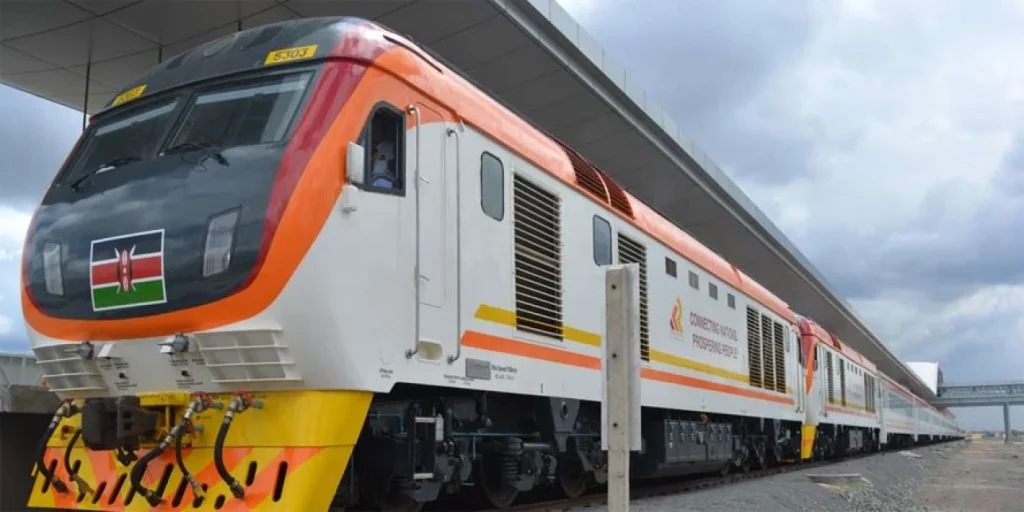
Working in partnership with the National Land Commission, the Kenya Railways Corporation has indicated that more than 3,500 landowners will be affected and are due for compensation.
Beyond the immediate challenges of relocation and compensation, the project is being sold on its potential to deliver substantial economic gains.
Other than the 100,000 direct jobs, indirect employment is expected to ripple through the economy as demand rises for locally sourced materials and services.
Manufacturers and suppliers of cement, steel, ballast and aggregates stand to benefit from procurement contracts, while small and medium-sized enterprises are being encouraged to bid for work in logistics, catering, accommodation, security and equipment support.
Supporters view the railway as a catalyst for inclusive growth that could reduce reliance on road transport, lower business costs and foster greater regional integration across East Africa.