How Mobile Apps Are Changing Rural Communities
How Mobile Apps Are Changing Rural Communities
Mobile phones have become one of Kenya’s most powerful development tools. From paying school fees to running businesses and accessing healthcare, a device that fits in your pocket is now opening doors that were once out of reach.
That transformation is reaching places like the Maasai Mara, where I&M Foundation, working with Germany’s development agency GIZ, The Maa Trust and local communities, is helping entrepreneurs build businesses that make full use of digital tools. While access to finance remains important, digital skills are becoming just as valuable for anyone hoping to grow a business in today’s economy.
Across Kenya, mobile phone penetration has continued to rise over the past decade. Smartphones are now everywhere, even in rural areas, making it much easier for people to access banking services, online markets, digital learning platforms and social media than before. For small business owners, this has changed how they communicate with customers, receive payments and promote their products.
A smartphone can become a business tool
Walk through shopping centres in towns such as Talek or Aitong and it is no longer unusual to see small business owners checking orders on WhatsApp, receiving payments through M-PESA or posting products on Facebook.
A phone that was once used mainly for calls and text messages has become a business partner.
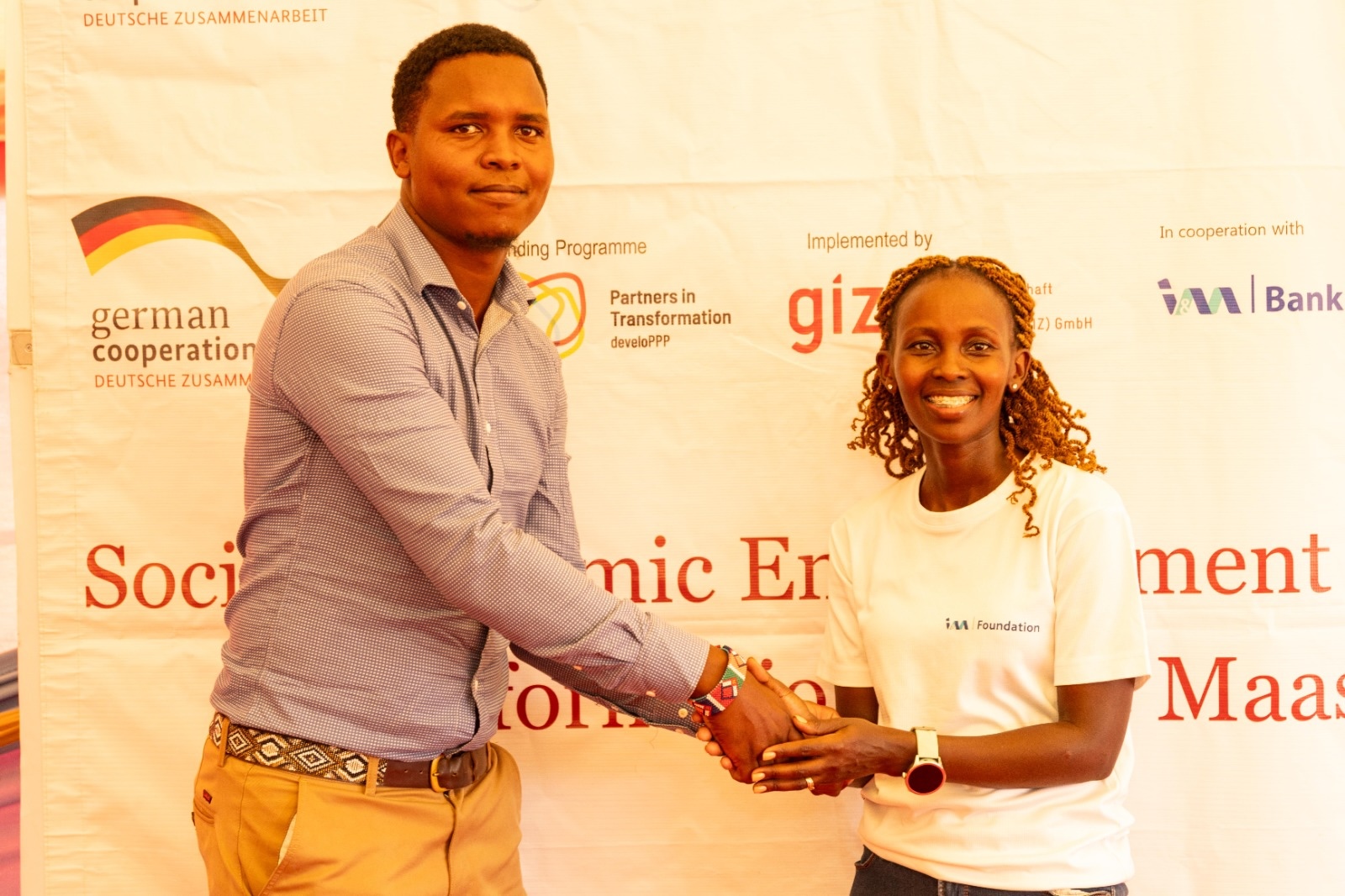
For entrepreneurs taking part in the Economic Empowerment and Gender Transformation in the Maasai Mara programme, digital literacy is increasingly becoming part of running a successful enterprise. Supported by I&M Foundation, GIZ and implemented by The Maa Trust through the develoPPP programme, the initiative combines entrepreneurship training with financial literacy and mentorship, helping participants build businesses that are ready for a digital economy.
If you run a bakery, poultry business or cyber café, knowing how to reach customers online or manage digital payments can really make a difference.
Throughout the Predators’ Den entrepreneurship competition, participants worked for months to refine their business ideas before presenting them to a panel of judges. Alongside business planning and financial management, many entrepreneurs discovered that online resources could enable them to reach more customers at little added cost.
A poultry farmer can accept orders on WhatsApp rather than wait for customers to come to the farm. A detergent maker can promote products in Facebook groups for nearby towns. A barber can share their work on Instagram and attract new clients before they even open for the day.
These are practical changes that are gradually reshaping rural entrepreneurship.
Digital skills are becoming as important as funding
For many years, conversations about supporting small businesses focused almost entirely on access to capital.
Money still matters, but funding alone rarely guarantees success.
Business owners today also need to understand digital payments, online communication, customer service and basic marketing through social media. Even simple tools such as Google Maps can help customers locate a business that previously depended only on word of mouth.
This is where having a partnership helps.
The I&M Foundation’s collaboration with GIZ and The Maa Trust combines financial investment, development expertise and community knowledge. Entrepreneurs are given mentorship that goes beyond bookkeeping and budgeting, helping them to understand how technology fits into modern business.
For many, learning how to confidently use online resources can be as transformative as obtaining seed funding. It allows them to reach customers outside their immediate neighbourhood, compare prices with suppliers and build relationships that were hard to maintain before.
Closing the digital divide
Kenya is widely considered one of Africa’s leaders in mobile money and digital innovation. But access to technology is not evenly distributed.
Many rural communities are still struggling to get reliable internet access, affordable smartphones and basic computer skills. Young entrepreneurs may easily adjust to new technology, while others may need more training and confidence to embrace digital platforms.
That’s why combining entrepreneurship with practical digital skills is a growing trend.
The Maa Trust’s close relationship with communities allows training to respond to local realities rather than assumptions. GIZ contributes technical expertise drawn from development programmes across different sectors, while I&M Foundation provides long-term investment that helps these initiatives continue beyond a single funding cycle.
Each partner addresses a different piece of the puzzle.
Looking beyond the phone
Technology alone does not create opportunity.
A smartphone cannot replace good business ideas, trusted relationships or hard work. But when entrepreneurs have access to finance, mentorship and the confidence to use digital resources effectively, they are in a better position to build businesses that can adapt and grow.
Already in parts of the Maasai Mara this is happening, with entrepreneurs mixing traditional knowledge with modern technology to improve their livelihoods.
As smartphone adoption continues to grow across Kenya, mobile apps will increasingly shape how rural businesses operate, connect with customers and access new markets.
For I&M Foundation, that is one reason partnerships matter. By working with organisations such as GIZ and The Maa Trust, the Foundation is helping entrepreneurs develop the financial and digital capabilities needed to thrive in an economy where opportunity is increasingly found on a mobile screen.
The impact goes beyond individual businesses. Stronger digital skills support stronger local economies, giving communities new ways to participate in Kenya’s growing digital future while building livelihoods that can endure for years to come.