How I&M Foundation Drives Lasting Impact
How I&M Foundation’s Partnerships Drive Lasting Impact
The conversation around corporate social responsibility has changed. Lasting social impact rarely comes from one organisation working alone. Increasingly, businesses are finding that meaningful change happens when they partner with communities and organisations that understand local challenges firsthand.
That’s how I&M Foundation is making that idea a reality in Kenya’s Maasai Mara. Together with Germany’s development agency GIZ, The Foundation is supporting entrepreneurship and conservation with the Maa Trust and local communities. This is a model of how partnerships can create opportunities that benefit people and the environment.
It is indicative of a wider understanding that the protection of natural resources and the creation of livelihoods are not mutually exclusive. Where local communities have sustainable livelihoods, conservation is a common interest, not an outside expectation.
I&M Foundation’s partnership model
The Maasai Mara is best known for its wildlife, luxury lodges and the Great Wildebeest Migration. Every year, thousands of visitors travel from around the world to experience one of nature’s greatest spectacles. Yet away from the safari routes, another story is unfolding. It is one centred on local entrepreneurs, women and young people building businesses that can strengthen both their communities and the ecosystem around them.
Rather than running standalone projects, I&M Foundation has chosen to work alongside organisations that already have deep roots within the communities they serve.
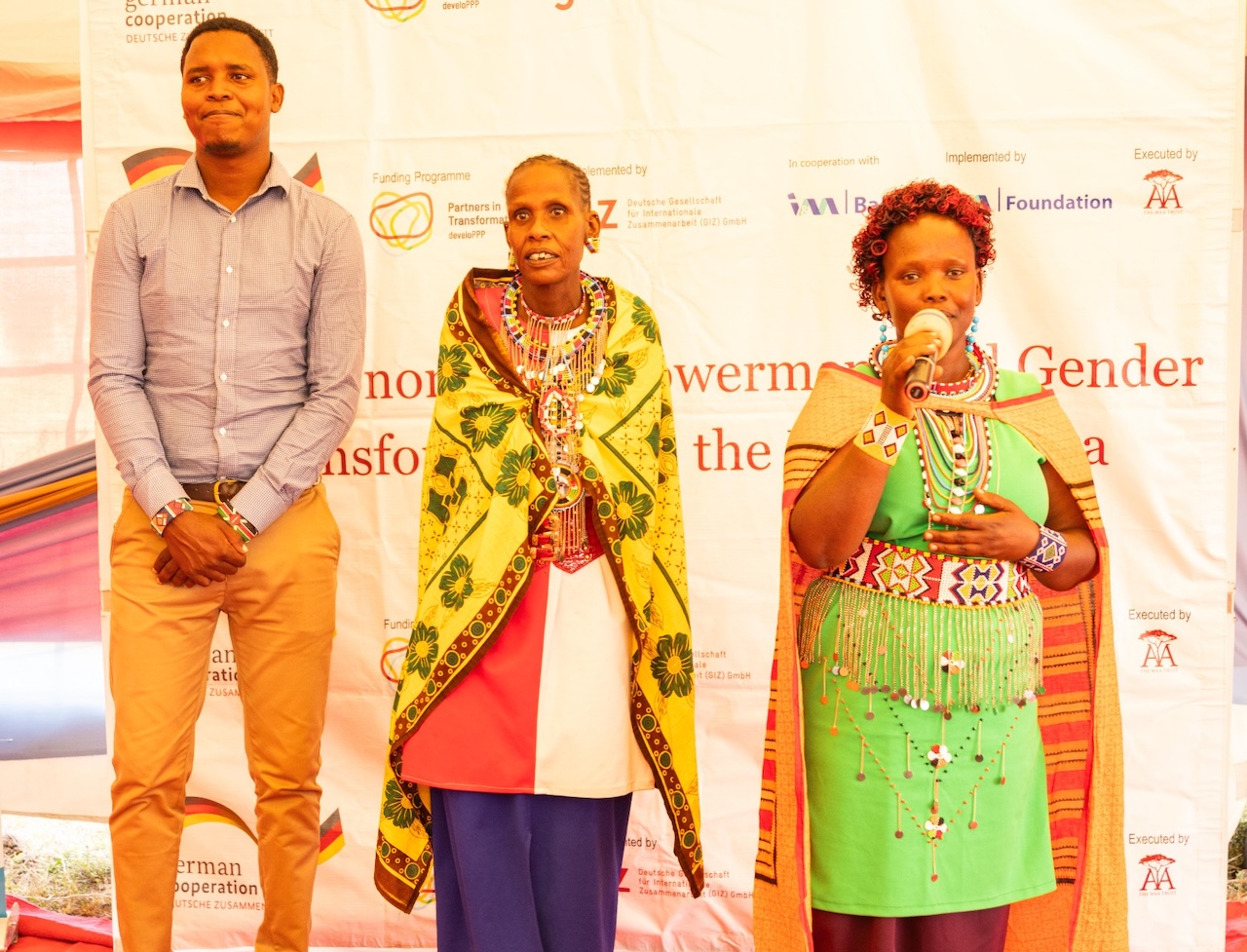
One example is the Economic Empowerment and Gender Transformation in the Maasai Mara programme. Through a partnership with GIZ under the develoPPP programme and implementation by The Maa Trust, the Foundation is part of a KSh230 million investment designed to empower women and youth across the Greater Maasai Mara ecosystem.
Each partner brings something different to the table.
I&M Foundation provides strategic investment and a long-term commitment to community development. GIZ contributes international development expertise and technical support, while The Maa Trust leads implementation on the ground through years of working closely with local communities.
That combination has produced practical results that extend well beyond funding.
Instead of handing out grants, aspiring entrepreneurs receive business training, financial literacy, mentorship and coaching before pitching their ideas. During the first edition of the Predators’ Den competition, 140 entrepreneurs from seven communities participated in the programme. After months of mentorship, finalists presented their businesses before a judging panel, with nine entrepreneurs receiving seed funding, scholarships and continued business support.
The businesses themselves reflect the realities of everyday life in the Mara. A bakery, cyber café, poultry enterprise, beekeeping venture, detergent manufacturing business, barber shop and water supply business may not attract the same attention as safari tourism, but they respond to genuine local needs while creating jobs close to home.
For I&M Foundation, that ongoing support matters as much as the initial investment. Entrepreneurs continue receiving guidance after the competition, giving promising businesses a stronger chance to grow, employ others and contribute to the local economy.
Building livelihoods that support conservation
For I&M Foundation, entrepreneurship is closely connected to conservation.
The thinking is straightforward. When young people and women have opportunities to build successful businesses within their communities, they are less likely to rely on activities that place pressure on natural resources. Strong local economies also reduce dependence on seasonal tourism and create more resilient communities.
Driving through towns such as Talek or Aitong, the contrast is easy to notice. Luxury safari camps sit only a short distance from communities where access to finance, formal employment and business opportunities can still be limited. Closing that gap requires investment that reaches beyond tourism itself.
This is complemented by the work of the Maa Trust which supports women’s groups, leadership development, education and financial inclusion and GIZ provides technical expertise to strengthen delivery of the programme. With the I&M Foundation, the partnership builds an ecosystem where entrepreneurs can access the knowledge, networks and financial support they need to succeed.
The result is a tighter link between economic opportunity and responsibility for the environment. Local economic growth that directly benefits communities is linked to protecting the natural environment for their own future.
A model that extends past the Maasai Mara The lessons from Maasai Mara are relevant far beyond conservation.
Communities in Kenya continue to grapple with challenges such as youth unemployment, lack of access to finance and the growing impacts of climate change. These are issues that rarely fall within the responsibility of a single organisation.
I&M Foundation’s work in the Maasai Mara reflects a broader philosophy that sustainable development is most effective when businesses, development partners and communities contribute their individual strengths.
Private sector organisations provide investment and financial expertise. Development organisations contribute technical knowledge and implementation experience. Communities themselves bring local understanding and identify solutions that are practical and sustainable long after external funding ends.
That does not mean every partnership is straightforward. Different organisations often have different priorities, timelines and ways of measuring success. Building trust also takes time, particularly in communities that have experienced projects that ended before delivering lasting benefits.
Still, initiatives such as Predators’ Den demonstrate what becomes possible when those relationships are built with a long-term perspective. The programme is helping entrepreneurs gain practical business skills, access funding and receive mentorship while reinforcing the link between economic opportunity and conservation.
As visitors arrive in the Maasai Mara this migration season, the wildlife will remain the biggest attraction. But behind that natural spectacle is another story that deserves attention.
Through partnerships with GIZ, The Maa Trust and local communities, I&M Foundation is demonstrating that lasting impact comes from bringing together different strengths around a shared purpose. Communities contribute local knowledge. Development organisations provide technical expertise. The private sector brings investment and long-term commitment.
Those partnerships are helping build stronger businesses, more resilient communities and a future where economic opportunity and conservation can continue to support one another for generations to come.