Small Budget, Strong Story: Film on a Budget
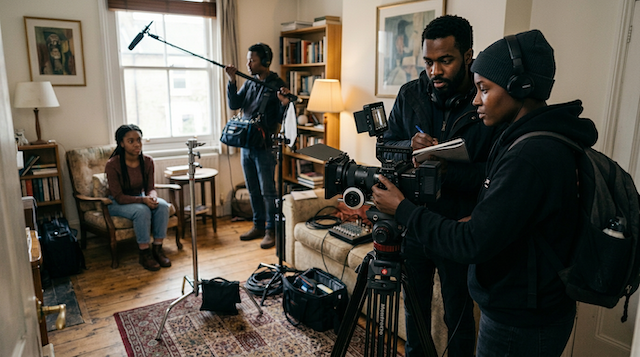
For an independent filmmaker, a small budget can feel like a wall standing between an ambitious idea and the finished film.
But limited resources can also force better creative decisions.
Instead of trying to make a low-budget production look expensive, filmmakers can focus on what matters most: a strong story, memorable characters and thoughtful use of every resource available.
Over the past decade, the MultiChoice Talent Factory (MTF) has trained 512 filmmakers across Africa. Its graduates have produced 162 films, with many going on to establish and lead their own production companies, contributing to the growth of Africa’s film and television industry.
Behind those numbers are filmmakers who have learned how to turn ideas into productions by making smart creative and practical choices.
Start with the story
One of the easiest ways to stretch a limited budget is to avoid writing a story that requires money you do not have.
If the heart of a film is a relationship between two people, for example, the story may not need multiple locations, large crowd scenes or elaborate action sequences.
Strong characters, clear conflict and meaningful stakes can keep an audience engaged without expensive sets or production design.
Before committing to a script, ask a simple question: what does this story really need?
Everything else is worth questioning.
Let limitations work for you
Budget constraints can sometimes open up creative possibilities.
A story written across ten locations could potentially work across two or three. A restaurant, office or home can serve several purposes when lighting, wardrobe, set dressing and camera angles are used effectively.
The same thinking can be applied to production techniques. Instead of relying on expensive visual effects or large-scale sequences, filmmakers can create impact through performances, dialogue, sound and thoughtful camera work.
MTF alumni Nikita Neo Mokgware and Serena Serene Mmifinyana of Botswana offer an example of what can happen when filmmakers work within their means.
After founding N&M Productions, their first feature film, The Painting, screened in Lusaka and aired on Zambezi Magic. They later collaborated with Angolan filmmaker Levis Albano on Muti Mbi Ma Pessoa, which screened in Angola, Brazil, Portugal and France.
Their work shows how a production can start small while creating opportunities to reach audiences beyond its original market.
Spend where it counts
Working with a small budget does not mean spending as little as possible. It means knowing where the money will have the greatest effect.
Sound, lighting, performances and post-production can have a significant impact on the final viewing experience. A filmmaker may gain little from spending heavily on equipment if the audience cannot see or hear a meaningful difference.
Before approving a cost, ask: will this improve what the audience experiences?
If the answer is no, that money may have a better use elsewhere.
MTF Class of 2024 graduate Agola Simon offers a useful example. Simon won the Best Sound Design award at the Uganda Film Festival for The Unforgivable, having worked on both production sound and post-production for the film.
The recognition highlights how technical skills can shape the quality of a production and earn industry attention, regardless of the size of its budget.
Locations also require strategic thinking. Rather than hiring several spaces, filmmakers can look for locations that can accommodate multiple scenes.
For emerging filmmakers, budgeting and production management can be as important as creative ability. A good idea only becomes a film when someone can make the numbers work.
Plan before the cameras roll
Once a budget has been agreed, planning becomes one of the most effective ways to protect it.
Detailed shooting schedules, shot lists and call sheets can reduce delays and help teams get the most from each production day.
Scenes can be grouped according to location to reduce travel and setup costs. Equipment requirements can be mapped out in advance. Time can also be set aside for problems that may arise during production.
The more decisions made before filming begins, the less time and money the crew has to spend solving avoidable problems on set.
That preparation becomes particularly important for small productions, where a lost shooting day can have a noticeable effect on the entire budget.
Budget for post-production from day one
Finishing the shoot does not mean the spending is over.
Editing, sound mixing, colour grading, music, graphics and subtitles all need to be considered when preparing the original budget.
The requirements can also change depending on where the film is intended to go. Filmmakers targeting different markets may need additional language versions, subtitles or specific delivery formats.
MTF productions have demonstrated the value of taking a finished film beyond its home market.
In West Africa, Azeezah Sama, produced by an MTF Class of 2023 student, was selected for the Toronto International Nollywood Film Festival and the Silicon Valley Film Festival. Tejiri, produced by a Ghanaian MTF Class of 2021 graduate, was selected for the African Cinema Section of the International Festival of Author Film in Morocco.
For filmmakers working with limited resources, the goal is therefore not simply to complete a film. It is to finish a film that is strong enough to find an audience.
Leave room for the unexpected
Even the most carefully prepared production can run into problems.
Weather can change. Equipment can fail. Transport can be delayed. A scene can take longer than expected.
On a small production, an unexpected expense can quickly affect the rest of the budget.
That is why a contingency fund matters. Even a modest reserve can give a production some room to deal with problems without compromising other areas.
The same principle applies to scheduling. A timetable that leaves no room for delays may look efficient on paper but become expensive when something goes wrong.
The bigger lesson
Micro-budget filmmaking is not about trying to make a large production look cheap.
It is about understanding what the story needs and making deliberate choices around those needs.
Across its academies and alumni network, the MultiChoice Talent Factory has supported filmmakers who have produced films, established production companies and taken their work to audiences and festivals outside their home countries.
A smaller budget demands creativity, planning and discipline. Those skills remain useful long after a filmmaker moves on from their first low-budget production.
In the end, the size of the budget may determine what is possible. It does not have to determine the strength of the story.