Safaricom Deepens Focus on Disability Inclusion
For most people, accessing a mobile service is part of everyday life. A quick app login, a mobile money transaction or a call to customer care can take only a few moments.
For persons with disabilities, however, these interactions can sometimes come with additional barriers.
Safaricom is seeking to address some of those gaps by putting persons with disabilities closer to the conversation around how its products, services and customer experiences are designed.
As part of its wider diversity, equity and inclusion efforts, the telecommunications company recently partnered with the Kenya Institute of Special Education (KISE) for a two-day empowerment programme focused on accessibility and participation.
The programme took place on Thursday, September 24, at KISE and continued on Friday, September 25, at the Kenyatta International Convention Centre (KICC).
A key part of the engagement was giving customers with disabilities an opportunity to speak directly with Safaricom teams, share their experiences and raise issues affecting how they interact with the company’s services.
Bringing customer feedback closer to the product
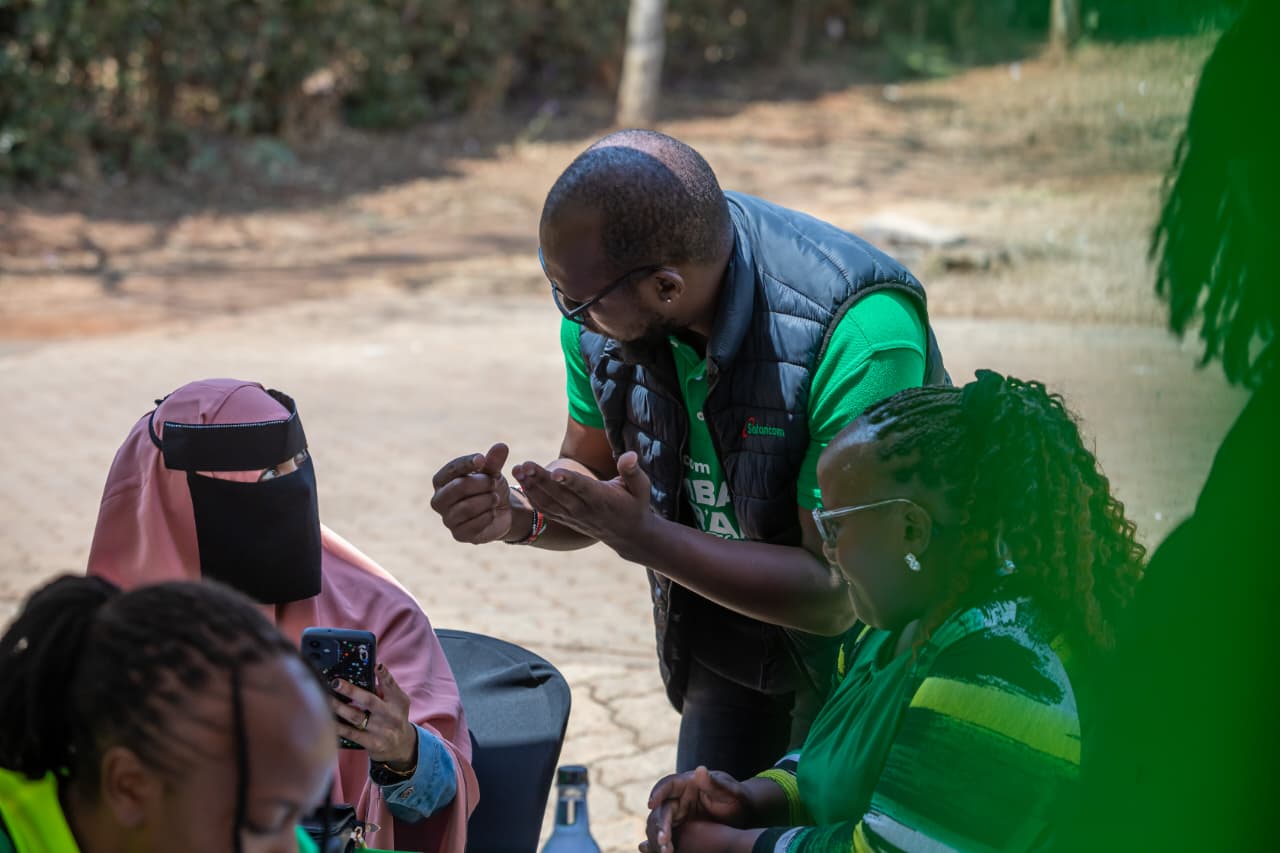
At KISE, Safaricom’s Care team set up a dedicated customer care desk where customers could seek assistance, raise concerns and provide feedback on products and services.
The conversations offered a direct view of some of the challenges customers experience in their daily interactions with technology.
That feedback becomes particularly relevant as more services move towards digital platforms, including the MyOne App. For customers with different accessibility needs, the way an app is designed, navigated and supported can have a direct impact on how easily they can use it.
The approach also shifts the conversation around accessibility.
Rather than making assumptions about what persons with disabilities need, direct engagement gives customers an opportunity to explain their experiences and identify areas where services can become easier to access and use.
For a company serving millions of customers through connectivity, mobile money and digital services, those conversations form part of a wider customer experience discussion.
Inclusion extends to the workplace
Safaricom’s disability inclusion efforts also extend beyond its customers.
The company has highlighted initiatives aimed at recruiting and retaining employees with disabilities, supporting career development and building a workplace where people with different abilities can contribute and grow.
Safaricom has a Diversity and Inclusion chapter that focuses on disability-related matters within the organisation. Workplace engagements have also incorporated practices such as sign-language interpretation and closed captioning to make participation more accessible.
The company has previously run programmes aimed at expanding opportunities for young people with disabilities.
One example is the IT Bridge Academy, which gave young people with disabilities opportunities to develop technology skills and gain workplace experience.
In 2024, Safaricom also launched a pilot technology re-skilling programme for young persons with disabilities, covering areas such as software engineering, career mentorship and coaching.
The company has also supported employee-led initiatives that focus on participation beyond recruitment.
Its Beyond Abilities programme, for example, gives employees with disabilities opportunities to take part in fitness and wellness activities through adaptive training, equipment and personalised support.
The underlying idea is that inclusion should extend into how people work, develop their skills and participate in the organisation.
Making digital participation more accessible
The conversation becomes even more significant as digital services take on a bigger role in everyday life.
Connectivity, mobile money and digital platforms are now closely linked to how people communicate, access information, manage finances and interact with businesses.
For persons with disabilities, accessibility can influence how easily they can take part in these activities.
This makes customer feedback an important part of improving the experience.
The KISE engagement gave Safaricom an opportunity to hear directly from customers about issues ranging from digital platforms and customer support to the usability of its products.
It also reinforced the role that partnerships with institutions representing and supporting persons with disabilities can play in developing more responsive services.
Taking the conversation beyond Safaricom
The two-day programme concluded at KICC during activities marking Deaf Awareness Week.
Safaricom joined other stakeholders and industry players to discuss strategies and opportunities for advancing accessibility and inclusion across products and services.
The wider discussion recognised that an inclusive digital ecosystem cannot be built by one organisation alone.
Businesses, technology companies, institutions and the disability community all have a role to play in identifying barriers and finding practical ways to remove them.
For Safaricom, the engagement with KISE brings that conversation closer to the people who use its services.
And that distinction matters.
Inclusion is about more than making a product available. It is also about whether people can access it, understand it and use it independently and meaningfully.
The two-day programme offered Safaricom an opportunity to put that principle into practice by listening to customers, supporting employees with disabilities and strengthening partnerships around accessibility.
As Kenya becomes increasingly digital, the question is no longer simply how many people are connected. It is also about what happens after they connect, and whether everyone has a fair opportunity to participate.