Safaricom Half Year Results Put My OneApp at the Centre
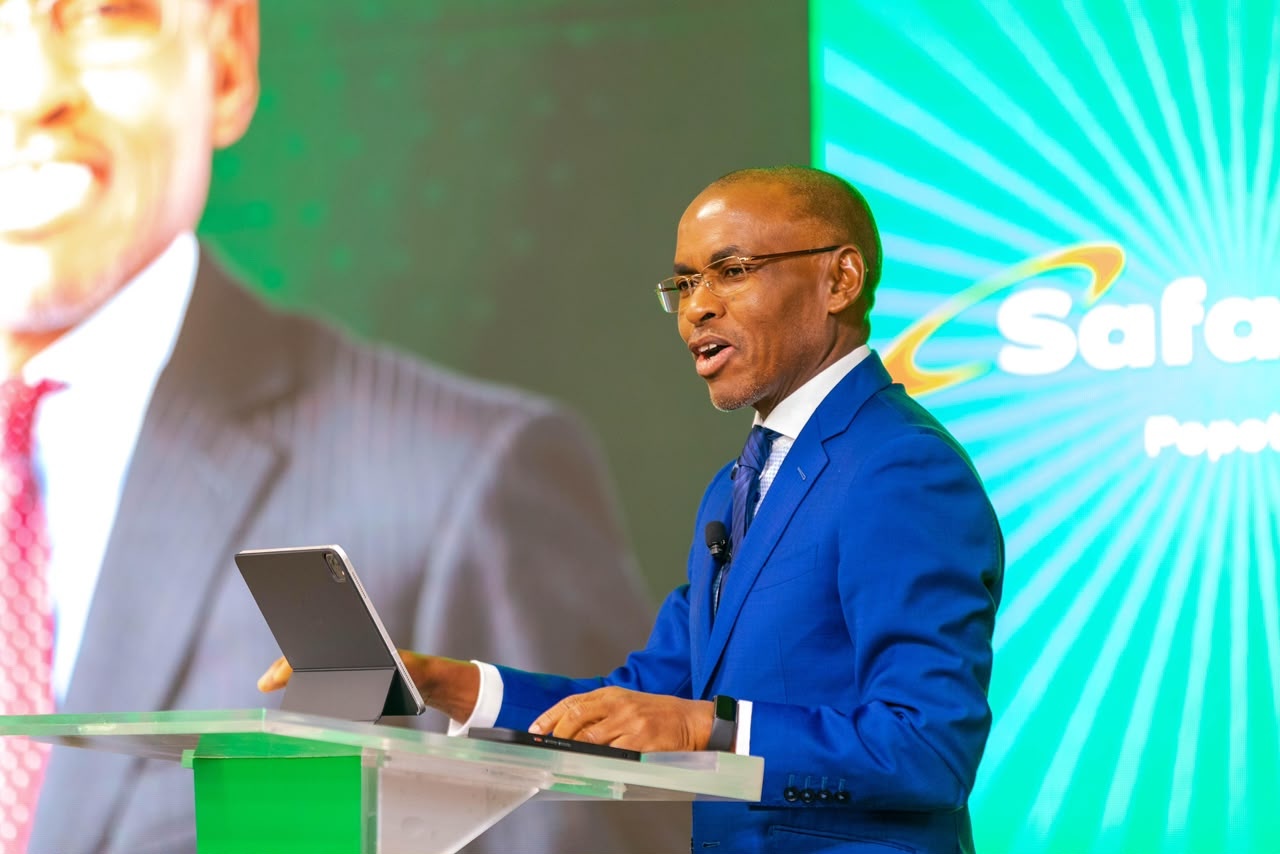
The Safaricom half year results for FY2026/27 show net income of Ksh 58.2 billion, up 35.9%. CEO Peter Ndegwa was quick to cool the room. “It’s still half-time,” he told investors at the Michael Joseph Centre in Nairobi today, reminding them the second half is yet to be played.
Group service revenue grew 13.1% to Ksh 226.1 billion. EBITDA rose 27.5% to Ksh 129.2 billion, which Ndegwa put at about a billion dollars. EBIT jumped 40% to KSh91.1 billion. Two things drove the result: steady growth in Kenya and a sharp fall in Ethiopia’s startup losses.
Kenya still carries the weight
Safaricom Kenya grew service revenue 11.3% to Ksh 216 billion. EBIT climbed 13.7% to Ksh 101.8 billion and net income rose 13.8% to Ksh 66.3 billion.
Ndegwa described the economy as resilient, helped by growth and a relatively stable currency. Higher food, fuel and transport costs still weigh on household incomes, so customers are hunting for value. His line was that Safaricom must stay affordable without cutting quality or reliability. The network now carries more than 34 million 4G-enabled devices, helped by cheaper routes to owning a phone.
My OneApp is the front door
Ndegwa called My OneApp the company’s “house of value”, a single place for connectivity, M-PESA, e-commerce and personalised offers. Since launch at the start of the financial year it has recorded 7.3 million downloads, 4.5 million monthly active users, 800 million transactions and Ksh 2 trillion in value.
The legacy M-PESA and MySafaricom apps will be retired in the coming months, and the loyalty platform will live inside My OneApp. Ndegwa joked that he hoped everyone in the room had the app, and that those without it would download it before leaving. For brands that advertise or partner with Safaricom, one app means one place where customers can be reached, sold to and rewarded.
M-PESA keeps widening
About 80% of merchant transactions are now free across roughly 4.5 million merchants. Around 17.5 million active credit customers are served every month. Shirika Pay lets groups manage money together, while QR codes, Tap to Pay and integrated point of sale tools make everyday payments simpler. Ndegwa stressed that trust and privacy sit under all of it.
Safaricom Ethiopia turns a corner
Safaricom Ethiopia now serves 15.4 million customers, in what Ndegwa noted is a business that did not exist four years ago. Service revenue grew 71.6% to Ksh 10.6 billion and the EBITDA loss narrowed 96.5% to Ksh 400 million. Ethiopia supplied just under 17% of Group service revenue growth, and the target is EBITDA break-even by the end of the financial year.
The risks remain real. Inflation, currency pressure and localised security concerns persist, and the conflict in the Middle East disrupted fuel supply, pushed up transport costs and slowed network rollout. Ndegwa said the recent election and new government bring more political certainty. He credited regulator-led interventions but asked for further action on minimum cost-led price correction.
What comes next
Beyond the phone, Safaricom is selling cloud, cybersecurity, IoT, managed services and SD-WAN to businesses, and scaling digital platforms in healthcare, social protection and agriculture. At home, fibre and 5G fixed wireless are expanding, with tokenised Wi-Fi letting customers buy connectivity in smaller, cheaper packages.
The test now is whether My OneApp can turn millions of downloads into daily habit. A fuller breakdown from finance chief Philip followed the CEO’s address, and we will update this story as the detail comes in.
Follow us here for more updates.