How Safaricom Is Becoming a Technology Company
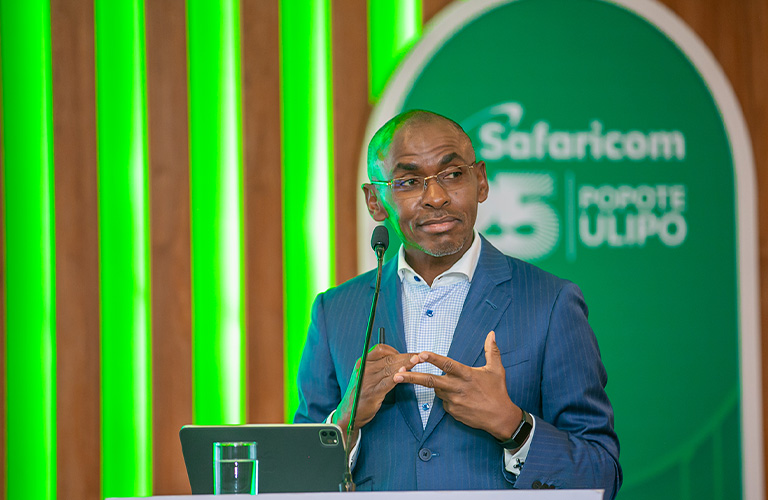
For years, Safaricom has been known as Kenya’s largest telecommunications company. That identity is changing. As the company prepares for its next 25 years, it is investing heavily in artificial intelligence, a rebuilt M-PESA platform and digital infrastructure that signals a much bigger ambition: becoming a technology company.
The direction became clearer ahead of Safaricom’s 2026 Annual General Meeting, where the company outlined how AI, next generation financial technology and long-term infrastructure investments will shape its future. While customers may continue making calls, browsing the internet or sending money as usual, much of what powers those everyday experiences is quietly evolving behind the scenes.
For many Kenyans, these changes may simply mean quicker transactions, better networks and quicker customer support. For Safaricom, they represent the next phase of a business that increasingly sees technology, rather than connectivity alone, as its biggest growth opportunity.
Fintech 2.0 Is Rebuilding M-PESA for the Future
At the centre of Safaricom’s technology strategy is Fintech 2.0, the new platform powering M-PESA.
As digital payments become larger and more complex, Safaricom has rebuilt the platform using a modern microservices architecture supported by artificial intelligence. The upgrade has increased processing capacity from approximately 4,500 transactions per second to 6,000, with the ability to scale to 10,000 as demand continues to grow.
That extra capacity matters because M-PESA today does much more than transfer money between individuals. Millions of customers rely on it for merchant payments, savings, investments, insurance, credit and business transactions throughout the day.
The upgraded platform is designed to support new services such as tap-to-pay and shared wallets while improving resilience during peak periods. It also gives Safaricom room to introduce additional financial products without rebuilding the system each time customer demand increases.
Dr. Peter Ndegwa, Safaricom’s Chief Executive Officer, said the company has refined its Vision 2030 strategy to accelerate digital platforms, artificial intelligence, enterprise digitisation and next generation financial services while continuing to expand broadband through 4G, 5G and fibre networks.
AI Is Becoming Part of Everyday Customer Experience
Artificial intelligence is also moving into many parts of Safaricom’s operations.
Customers are already interacting with AI-powered support across platforms including Telegram, Facebook, the web and the M-PESA app. Behind the scenes, AI is helping improve fraud prevention, strengthen network reliability and support smarter credit decisions.
The company is also applying AI to enterprise services, allowing businesses to access smarter digital tools while engineers use predictive maintenance to identify potential network issues before customers notice any disruption.
Rather than treating AI as a standalone product, Safaricom is embedding it into services people already use every day. It’s a shift that reflects how many technology companies now build digital experiences: quietly improving performance without asking customers to change how they interact with the service.
Building for the Next Quarter Century
Safaricom’s transformation into a technology company is supported by long-term investment decisions as well.
One of the biggest milestones during FY26 was securing a 25-year unified licence from the Communications Authority of Kenya. The licence provides regulatory certainty that allows the company to plan long-term investments in digital infrastructure, broadband expansion and next generation connectivity across Kenya.
Beyond commercial growth, Safaricom continues to link its business strategy with community development.
Over the past five years, the Safaricom and M-PESA Foundations have invested KSh 22.8 billion in education, healthcare, environmental conservation and humanitarian programmes. During FY26 alone, these initiatives directly reached more than 4.4 million people.
The recently launched Citizens of the Future programme reflects that long-term thinking. Over the next five years, the initiative aims to build or refurbish 500 schools, provide 10,000 scholarships and equip 56,000 teachers with digital skills to prepare young people for a rapidly changing economy.
On any given day, it’s easy to see how deeply Safaricom has become part of everyday life. At a roadside kiosk, someone taps a phone to pay for tea. A small business owner receives payments through M-PESA before opening shop. Students buy data bundles before logging into class.
Those familiar moments may look the same tomorrow. The technology behind them probably won’t.
As Safaricom enters its next chapter, its ambition is no longer centred only on connecting people through mobile networks. It is investing in artificial intelligence, digital platforms and financial technology with the goal of becoming a technology company built for the decades ahead.