Tetra Pak Launches Paper-Based Juice Packaging Barrier
Tetra Pak Launches World-First Paper-Based Barrier for Juice Packaging with García Carrión
Tetra Pak, in partnership with Spanish beverage producer García Carrión, has unveiled the world’s first paper-based barrier technology for juice packaging, marking a major milestone in sustainable food and beverage packaging. The innovation significantly reduces reliance on fossil-based materials and is now being rolled out across multiple international markets.
A global first for the juice category
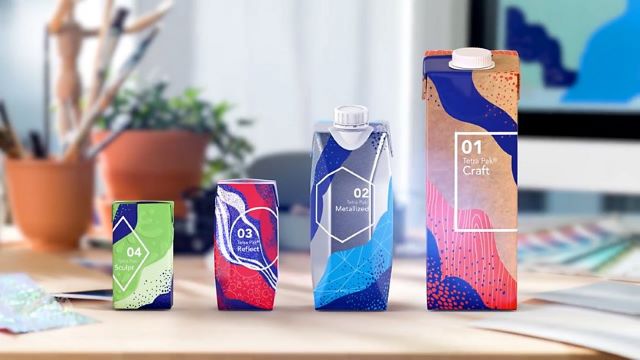
The new solution debuts in the Tetra Brik® Aseptic 200 ml Slim Leaf carton, launched under García Carrión’s flagship Don Simón juice brand. This is the first juice portion pack globally to use a paper-based barrier instead of the traditional aluminium foil layer, and it is also the first of its kind available in Spain.
The carton is made with up to 80% paper, strengthening its sustainability credentials. When combined with plant-based polymers used in the coating layers, the total renewable content reaches 92%. According to verification by the Carbon Trust, the new packaging delivers a 43% lower carbon footprint compared to conventional aseptic cartons that rely on aluminium and fossil-based polymers.
Sustainability meets scale
“For more than 135 years, García Carrión has been committed to responsible innovation and respect for the environment,” said Don José García Carrión, President of García Carrión. “This packaging represents a meaningful step in reducing our environmental impact while continuing to deliver high-quality products to consumers.”
Fala Corujo, Vice President of García Carrión, added that the innovation aligns closely with the company’s long-term sustainability ambitions.
The launch represents a practical application of García Carrión’s 360° Sustainability Strategy, which earned the company the Factories of the Future Award 2024 for Excellence in Sustainability and Circular Economy.
From Tetra Pak’s perspective, the collaboration demonstrates how sustainable innovation can move beyond pilot projects and into mainstream production.
“This launch is an important milestone in our journey towards fully renewable and recyclable packaging,” said Tatiana Liceti, Executive Vice President, Packaging Solutions at Tetra Pak. “By working closely with our customers, we are showing that sustainability can scale across markets without compromising performance, safety, or quality.”
What is the paper-based barrier?
Tetra Pak’s paper-based barrier replaces the aluminium foil layer traditionally used in aseptic cartons with a renewable, paper-based alternative. This shift helps lower carbon emissions while supporting the transition away from fossil-based materials.
Despite the change in material, the barrier continues to protect contents from oxygen, light, moisture, and bacteria, ensuring food safety and maintaining shelf life comparable to conventional aseptic packaging.
Where recycling infrastructure exists, cartons using the new barrier can be collected, sorted, and recycled at scale. The innovation is also expected to improve recycling efficiency by enabling higher recovery of paper fibres, while maintaining quality non-fibre material streams.
A step toward fully renewable food packaging
The paper-based barrier technology forms part of Tetra Pak’s broader ambition to develop what it describes as the world’s most sustainable food package, one that is paper-based, fully recyclable, and made entirely from responsibly sourced renewable or recycled materials with the lowest possible carbon footprint.
Tetra Pak first introduced its aseptic carton with a paper-based barrier in collaboration with a dairy producer in Portugal in 2023. The innovation went on to receive the “Resource Efficiency” award at the Sustainable Packaging News Awards 2024, further validating its impact within the global packaging industry.