Why Most Kenyans Are Struggling to Prepare for Retirement
Saving for retirement sounds simple until life gets in the way.
School fees need paying. Family members need support. Debt comes due. Income can change from one month to the next. Then, when someone changes jobs, the retirement money they had been building can suddenly look like the easiest pot to reach.
That tension is at the heart of a new study showing that seven in 10 Kenyans do not believe they are on track for a comfortable retirement.
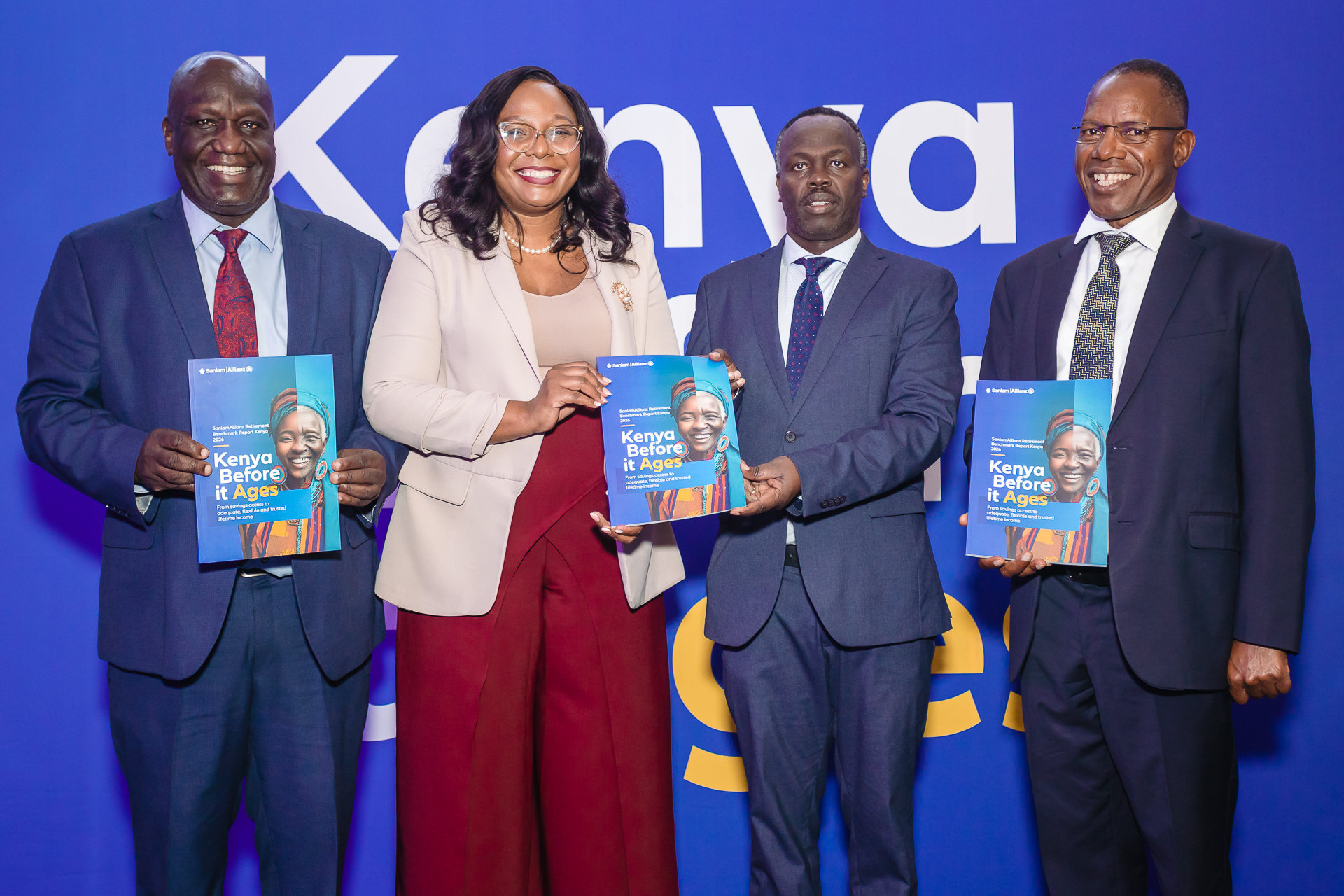
The finding comes from the inaugural SanlamAllianz Kenya Retirement Benchmark, released in Nairobi on October 12 under the theme Kenya Before It Ages. The study looks at how Kenyans are preparing for retirement and where that preparation is falling short.
The findings suggest that the problem is not a lack of awareness. Only four per cent of respondents identified a lack of understanding or trust in retirement products as a barrier to saving.
For many households, the bigger problem is simply finding money left over to save.
Family needs are taking priority
Household and family expenses were cited as the biggest barrier to retirement saving, with 44 per cent of respondents pointing to these costs.
Another 37 per cent cited low or irregular income, while 24 per cent said debt repayments were getting in the way.
Supporting dependants is also affecting long-term financial plans. About 62 per cent said supporting family members reduces the amount they can put aside for retirement.
The pressure becomes clearer when looking at emergency savings. Almost four in 10 respondents said they could cover basic household expenses for only two months or less if their income stopped today.
In the past year, 23 per cent had either dipped into their savings or reduced their retirement contributions because money was tight. Among people aged 20 to 39, the figure rose to 29 per cent.
Jacqueline Karasha, Chief Executive Officer and Principal Officer at Sanlam Allianz Life Insurance (Kenya), said the next challenge for Kenya is turning financial inclusion into long-term financial security.
“Retirement should be a stage of life that offers dignity, independence and choice,” she said.
Changing jobs can come at a long-term cost
One of the strongest findings in the study concerns what happens to retirement savings when people leave employment.
Among respondents who had left a job or business while holding retirement savings, 53 per cent withdrew at least part of the money. A further 26 per cent took everything.
Only 32 per cent kept or transferred their full retirement savings.
The reasons for taking the money were often practical. A third said they used the cash to start or support a business or farm.
But there was a significant regret factor.
Although 65 per cent said they understood the impact of their decision at the time, 53 per cent later regretted withdrawing the money.
The study also found that one in five people received no help when they left their job.
Karasha said the findings show why retirement preservation cannot depend on awareness alone.
People need practical guidance when they leave employment, particularly at a point when immediate financial needs can easily overshadow a future that feels far away.
Many people are saving without knowing what they are saving for
Another challenge is that having retirement savings does not necessarily mean knowing what those savings will provide later.
One in five working-age contributors do not know how much they have accumulated.
Only 29 per cent know how much monthly income they will need during retirement.
The gap between saving and understanding future income is also reflected in awareness of retirement income options. Nearly half, 45 per cent, had never heard of income drawdown.
At the same time, 51 per cent said they would prefer a guaranteed monthly income for life.
Healthcare is another major concern. More than half of respondents, 53 per cent, have no funded plan for medical expenses after retirement.
Interestingly, retirement may not mean stopping work altogether for many Kenyans. Some 88 per cent said they would continue working or running a business even if their retirement income was enough to support them.
Jonathan Stichbury, Managing Director and Chief Executive Officer of SanlamAllianz Investments Limited, said the focus now needs to shift from simply building savings to turning those savings into sustainable income.
“Retirement security is ultimately not about the balance someone accumulates during their working years, but whether those savings can provide a reliable income throughout retirement,” he said.
Kenya’s changing workforce adds another layer
The retirement conversation is also taking place against the reality of Kenya’s labour market.
The Kenya National Bureau of Statistics reported that the economy grew by 4.6 per cent in 2025, while the informal sector accounted for 87.2 per cent of new jobs.
That matters for retirement planning because income is often less predictable outside formal employment.
Among working respondents in the study, 39 per cent said their earnings change from month to month.
Mobile money could also play a bigger role in reaching informal workers, with 51 per cent of informal workers saying they would prefer to make retirement contributions through mobile money.
But greater digital access comes with its own risks.
The study found that 45 per cent of respondents had lost money or personal information through a digital financial scam. Among younger respondents, that figure rose to 54 per cent.
A trusted provider or regulator was the feature respondents ranked highest when considering what would attract them to a retirement product.
Kenya still has time to change the picture
The numbers paint a difficult picture, but they also point to an opportunity.
Kenya has a relatively young population, giving workers time to build stronger retirement plans before the pressure of an ageing population becomes greater.
Dr Nyamemba Patrick Tumbo, Group Chief Executive Officer of SanlamAllianz Kenya, said the annual benchmark will track how retirement preparedness changes over time.
The study will now be repeated every year.
For ordinary Kenyans, however, the bigger question is much more immediate: if retirement savings were converted into a monthly income today, would that income actually be enough?
For seven in 10 Kenyans, the answer currently appears to be no.
Follow us on X, Instagram and Facebook for the latest stories, trends and updates from Nairobi and beyond.