Who Gets Handed the Camera in Kenya?

On Tuesday night, I opened my phone and counted them.
Three names.
Three photographers I have called so often that I no longer need to search for their numbers. A client needs a shoot, I need a photographer, and my thumb goes straight to one of those three contacts.
It takes less than five minutes.
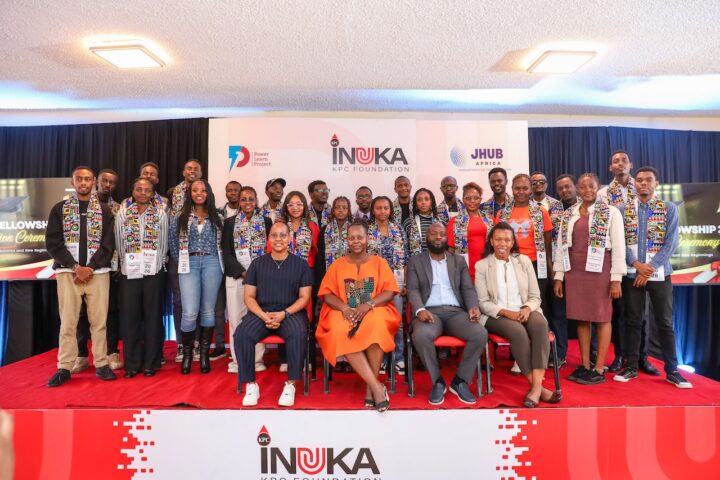
I had not thought much about it until I went through the national finalists of Safaricom’s Capture the Good challenge.
Eighteen creatives had made it through, travelling to communities across Kenya and bringing back stories about classrooms shaping children’s ambitions, boreholes strengthening communities and small businesses creating opportunity.
The stories were powerful.
But something else caught my attention.
Only one woman was among the 18 national finalists.
And suddenly, the story stopped being about a photography competition for me. It became about the three names in my phone.
Long Before the Shortlist
I have been part of the creative ecosystem long enough to know how photographers often get opportunities.
A client calls on Tuesday. The shoot is Thursday. There is a budget, a location and a deadline.
Nobody wants a lecture about the creative industry. They want a name.
So I give them one.
Usually, I give them one of the same three.
They are excellent photographers. I trust their work. That is not the problem.
The problem is that I have allowed familiarity to define talent.
I tell myself I hire on merit. If I am honest, I also hire on memory.
The person who did a great job last month gets called again. They recommend someone they know. That person recommends someone else. A photographer brings an assistant who eventually becomes a photographer.
The same names keep travelling.
So does the opportunity.
Walk onto a Kenyan production set and you will often find plenty of women. There may be a producer, production manager, writer, coordinator, stylist or editor.
Then look at who is holding the camera.
The room often changes.
Nobody has to deliberately exclude women for this to happen. Sometimes it is simply a series of small decisions repeated over time.
A Camera Is an Expensive Invitation
Photography is expensive to enter. Cameras, lenses, lighting, computers and storage cost serious money.
Many photographers begin by borrowing equipment, renting or assisting someone who already has it.
That trust matters.
Professional photography is also learned on location. You carry equipment, assist, shoot second and watch someone else work.
Those opportunities often move through referrals, friendships, WhatsApp groups and professional circles.
If those circles mostly include men, the same pattern can continue.
Talent can sit outside the circle without ever getting tested.
Safaricom Now Controls 69.8% of Kenya’s Mobile Market, CA Data Shows
Who Are We Calling?
That is why I think the conversation needs to go beyond the shortlist.
Who is in our contact lists?
Who gets invited to assist?
Whose portfolio gets sent to a client?
Who gets the first proper commission?
Those decisions happen long before someone appears among 18 national finalists.
The women are there. Finding them is not impossible.
I simply was not looking.
Looking takes a few minutes. Forwarding one of the three familiar numbers takes four seconds.
When a brief is due on Thursday, four seconds usually wins.
Capture the Good has made me think about something beyond the competition itself.
If we care about who tells Kenyan stories, we should also care about who gets the opportunity to become the person behind the camera.
That does not mean lowering the standard. It means widening the path to it.
The next time someone asks me for a photographer, I am going to look beyond my contact list.
I am going to find a fourth name.
Then a fifth.
Because sometimes changing an industry starts with something very small.
Opening your phone and asking:
Who else gets handed the camera?