
NASA Chooses Former Google CEO’s Rocket Company for 2028 Mars Mission
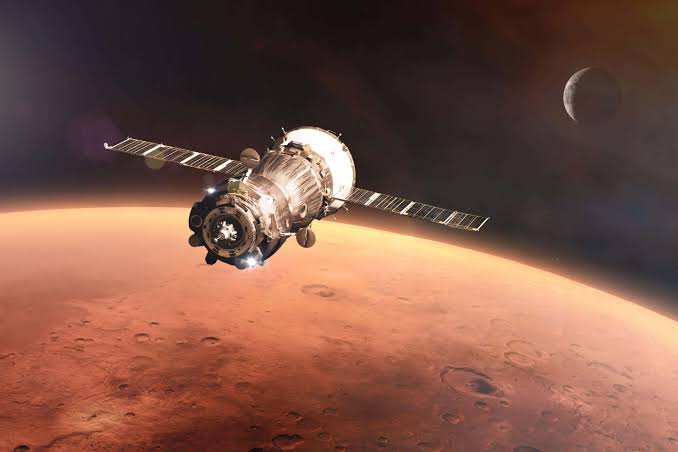
Under the agreement, Relativity Space will provide the spacecraft
NASA has selected Relativity Space, the rocket company led by former Google chief executive Eric Schmidt, to launch a scientific payload to Mars in 2028 under a new public-private partnership agreement.
A scientific payload in space missions refers to the specialised instruments, sensors and experiments carried aboard a spacecraft specifically to collect data and conduct research, as distinct from the “bus” systems that handle power, propulsion, communications and navigation.
Under the agreement, Relativity Space will provide the spacecraft, launch vehicle and cruise operations required to deliver the payload to the Red Planet. The mission will carry NASA’s Aeolus payload, a suite of instruments designed to study the Martian atmosphere.
According to NASA, Aeolus, scheduled to launch in 2028, will provide the first integrated daily global view of atmospheric conditions on Mars, including winds, temperatures, dust and cloud patterns. The agency said the data collected by the mission is expected to sharpen understanding of the planet’s climate and weather systems, while providing practical benefits for future missions.
Relativity Space, founded with a focus on 3D-printed rocket manufacturing, is best known for its Terran 1 vehicle, which launched in 2023. The rocket achieved several milestones but ultimately failed to reach orbit. The company has since pivoted to the larger, reusable Terran R, designed as a medium-to-heavy lift vehicle capable of supporting more ambitious missions.
The mission represents the first flight in the company’s new Interplanetary Sciences Program.


