Samsung Mini LED TV Kenya 2026: Full Review & Price
Samsung’s New TV Just Learned to Watch Football With You
There is a particular kind of silence that falls over a Nairobi living room when a Harambee Stars match kicks off and the picture starts to lag half a second behind the commentary. Samsung thinks it has an answer to that problem and it arrived in the country this month wrapped in a Mini LED screen that claims to know the difference between a football match and a Nollywood drama the moment you switch it on.
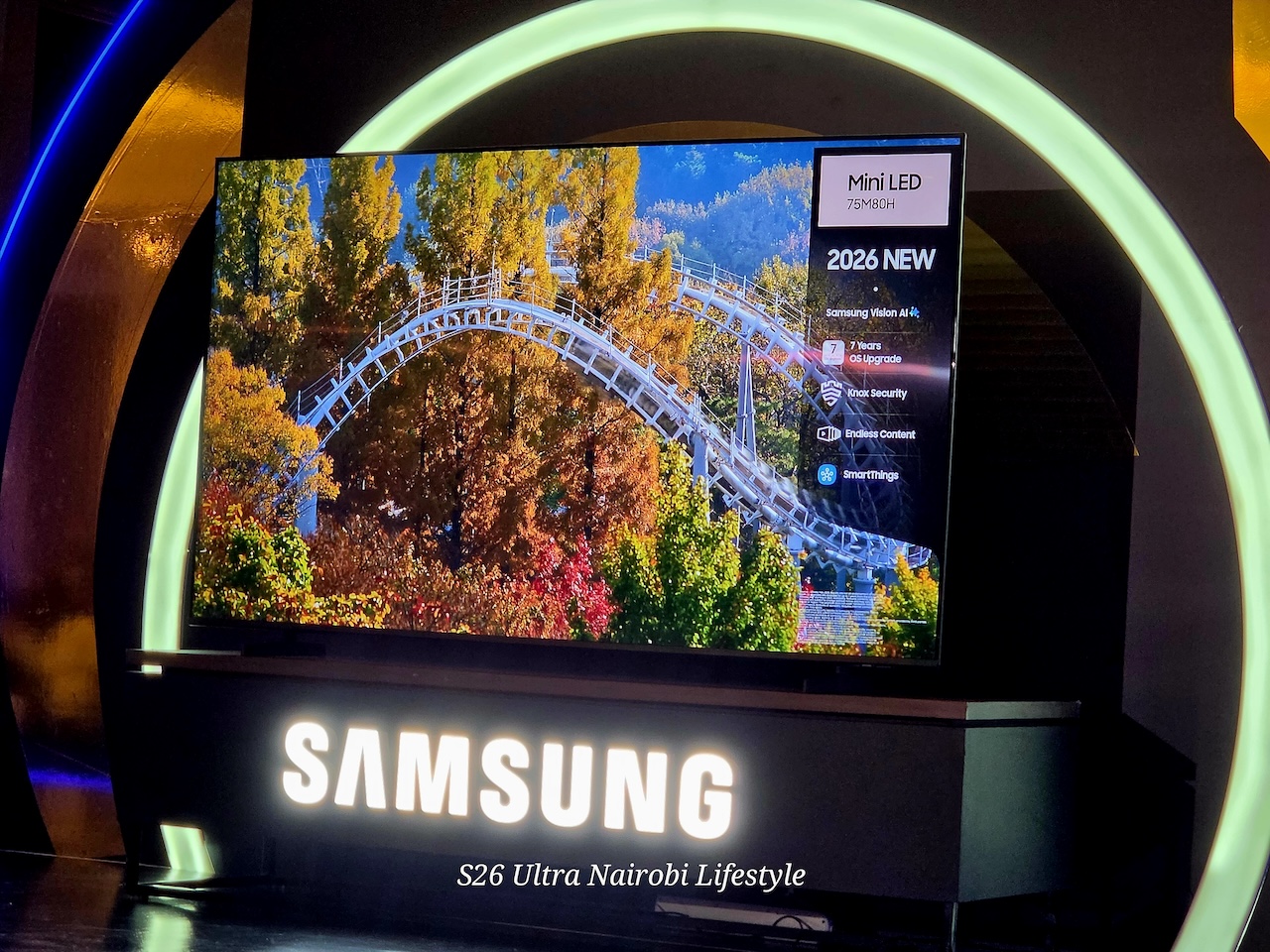
The new Samsung Mini LED lineup, the M80H and M70H series, launched in Nairobi in mid-July, and it is easily the most interesting television release the local market has seen in a while. Not because of the size of the screens, though some do stretch impressively large, but because of what Samsung is trying to bolt onto the hardware: an AI layer that watches what you are watching and adjusts itself accordingly.
What actually changed under the hood
Mini LED is not a brand-new idea globally, but it is new to this price bracket in Kenya. Instead of a handful of large LED backlights, the panel uses thousands of much smaller ones, which gives the television far more control over which parts of the screen go bright and which stay dark. In practice, that should mean a night scene in a thriller looks properly black instead of grey, while a sunlit outdoor shot still pops.
Samuel Odhiambo, who heads Samsung’s consumer electronics business in Kenya, put it simply at the launch event. He said the company’s goal was to build sets that respond to what a household actually watches, rather than screens that just display whatever is sent to them.
That philosophy shows up most clearly in two features Samsung is pushing hard: Vision AI Companion and AI Soccer Mode. The first lets you talk to the television and ask it questions, closer to how you’d use a smart speaker than a remote control. The second is aimed squarely at Kenya’s football-obsessed households. It recognises when soccer is on screen and tweaks picture sharpness and sound automatically, theoretically making a Premier League Saturday feel a bit more like being pitch-side than watching from a sofa in Kileleshwa or Kitengela.
There’s also Motion Xcelerator, running at 144Hz, which matters more than it sounds. Fast camera pans in action films and quick transitions during a match are where cheaper televisions tend to blur or judder. Samsung says this is designed to keep those moments sharp, which will matter more to gamers and sports fans than to someone mostly watching news bulletins.
The price question, and why it matters here
Here is the part that will decide whether any of this technology reaches actual living rooms. The M70H and M80H start at roughly KES 165,000, which places them well below Samsung’s flagship Neo QLED range but still firmly in aspirational territory for most Kenyan households. Samsung appears aware of this gap. The launch included a financing arrangement with Watu Africa, allowing buyers to spread payments rather than pay upfront, a detail that says as much about the state of consumer purchasing power as it does about the television itself.
It is worth being honest about what is still unclear. Samsung has not published full screen-size and price breakdowns for every model in the range, and retailers in Nairobi were still finalising stock levels as of the launch. Anyone shopping this week should expect some variation in what different electronics shops quote.
The AI features also deserve a dose of scepticism rather than blind enthusiasm. Voice assistants on televisions have a mixed history of usefulness once the novelty wears off, and whether Vision AI Companion becomes a genuine daily habit or a feature people forget exists after the first month is something only time, and actual Kenyan households, will settle.
Where this fits in the bigger picture
Samsung is marking twenty years as the world’s top-selling television brand this year, and this launch is partly about defending that position as competitors push their own AI and mini LED offerings. But there is a local angle too. Later in the year, the company plans to bring in an even higher-end Micro RGB television, priced above its OLED models, signalling that Kenya is being treated less as an afterthought market and more as a genuine testing ground for premium tech.
For now, the M70H and M80H represent something fairly specific: a bet that Kenyan buyers are ready to pay for smarter, sharper screens, provided the financing makes the jump manageable. Whether that bet pays off will show up less in press releases and more in how many of these sets end up switched on during the next big match night, quietly deciding on their own that the game deserves a better picture.