Watu Cuts Motorcycle Deposit to 27%
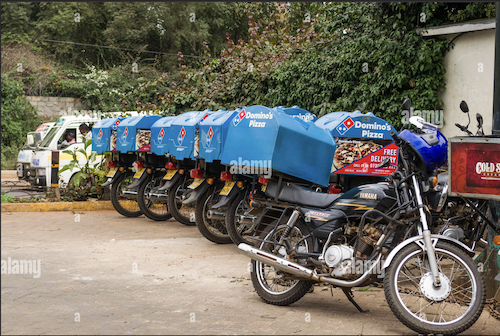
Stand outside almost any busy restaurant in Westlands or Kilimani at eight on a Friday evening and count the motorcycles.
They arrive in twos and threes, insulated delivery boxes strapped behind the seats, riders checking their phones for the next order. One minute they are waiting outside a restaurant. The next, they are weaving through traffic towards an apartment in Kileleshwa or a house in Lavington.
This is the part of Nairobi’s dining and shopping economy that rarely gets noticed.
The city eats, shops and sends differently now. Dinner comes to the door. So do groceries, a forgotten phone charger and a birthday cake ordered from across town. Behind that convenience is a rider, a motorcycle and a business that depends on keeping both moving.
For riders looking to get into that business, the cost of getting the motorcycle in the first place can be a major hurdle.
That cost has now come down for some new customers.
Watu Credit has reduced the deposit required to finance selected petrol motorcycles from 35% to 27% for new customers, giving riders a lower amount to raise upfront before taking their motorcycles onto the road.
For eligible returning customers, the deposit has also dropped from 30% to 24%.
The new terms initially apply to selected Boxer, TVS, Honda and Haojin motorcycles and are available through Watu’s branches, local dealers and agents.
What does a 27% deposit mean?
The change becomes easier to understand when you put actual numbers to it.
Take a motorcycle priced at KSh 150,000.
Under the previous 35% deposit, a new customer would have needed KSh 52,500 upfront. At 27%, that amount falls to KSh 40,500.
That is a difference of KSh 12,000 at the point of purchase.
For a motorcycle costing KSh 200,000, the previous 35% deposit would have been KSh 70,000. At 27%, the deposit becomes KSh 54,000, leaving the rider with KSh 16,000 less to raise upfront.
The final amount depends on the price and model of the motorcycle, as well as the applicable financing terms. The lower deposit does not reduce the motorcycle’s purchase price. It reduces the amount the customer needs to provide at the beginning, with the balance financed.
A workforce in plain sight
There are a great many riders doing this work.
Kenya has about 1.2 million gig workers, with 82% operating in the informal sector, according to a policy guide on the digital economy developed with the Mastercard Foundation. The figure covers a wide range of workers, including freelancers, ride-hailing drivers and delivery riders.
Motorcycles tell part of the same story.
The Economic Survey 2026 by the Kenya National Bureau of Statistics shows that 241,763 motorcycles and auto-cycles were newly registered in 2025, more than double the number registered the previous year.
That works out to roughly 660 new registrations every day.
The survey also puts the informal sector at 83.8% of recorded employment, highlighting the scale of the economy in which people create income through small businesses, personal assets and flexible work.
For many riders, the motorcycle is therefore more than a means of getting around. It is the asset that makes the work possible.
Bringing down the first hurdle
Watu Credit says the lower deposit is intended to make it easier for customers to access motorcycles that can generate income and support their businesses.
“What we are trying to unlock for our customers is easier access to an income-generating asset that puts more money in their pockets and helps them keep building their livelihoods and their businesses,” said Damien Gueroult, Watu’s Country Manager for Kenya.
For a new rider, the difference can be significant.
Raising KSh 40,500 is a different proposition from raising KSh 52,500. The gap may determine how quickly someone can move from planning to actually getting on the road and earning.
And that brings us back to those motorcycles outside Nairobi’s restaurants.
They may look like a small part of the evening rush, but each one is tied to someone’s income, a customer’s dinner, a family’s groceries or a business trying to get something across town.
Lowering the entry cost could put that opportunity within reach of more riders.
For a city that increasingly expects things to arrive at its doorstep, that matters.
Follow us on X, Instagram and Facebook for the latest stories, trends and updates from Nairobi and beyond. X · Instagram · Facebook