What Every Safaricom Customer Should Know
What Every Safaricom Customer Should Know
A quick M-PESA payment at your neighbourhood kiosk. Buying mboga at City Market. Sending fare to a friend before they board a matatu. These are everyday moments for millions of Kenyans, yet each one leaves behind bits of personal information. That’s why Safaricom privacy has become an increasingly important conversation, not just for technology experts, but for anyone with a mobile phone.
For years, mobile numbers have quietly become personal identifiers. They link us to our bank accounts, social media profiles, healthcare services, and even government platforms. When that information lands in the wrong hands, the consequences can range from nuisance calls to targeted scams and harassment.
It explains why Safaricom has been making changes that many customers may have noticed without fully understanding them.
Why your phone number is becoming less visible
If you’ve recently received money through M-PESA, you may have realised that the sender’s or recipient’s full phone number is no longer displayed. Instead, part of the number is hidden.

At first, the change confused some users. Small business owners wondered how they would call customers back. Others questioned why something that had always been visible suddenly wasn’t.
The reasoning is fairly straightforward.
A phone number is personal data. When shared unnecessarily, it can be copied, stored or used for purposes the owner never intended. Someone paying for groceries, fuel or lunch should not automatically expose their full contact details simply because they completed a transaction.
Safaricom describes this approach as data minimisation, a privacy principle that limits the amount of personal information shared during everyday transactions. Earlier this year, the company began masking phone numbers across many M-PESA transactions as part of that effort.
For many customers, that simple change means one less opportunity for their information to be collected by strangers.
The scam isn’t always technical
When people hear the words “data breach,” they often imagine hackers breaking into computer systems.
In reality, many scams begin with something much simpler. A phone call.
Someone claims to be from Safaricom. Another pretends to be from your bank. They sound confident, know your name and ask you to confirm an OTP or account details because there’s supposedly a problem with your line.
The technology hasn’t failed. Trust has.
Cybersecurity experts call this social engineering. Fraudsters manipulate people into giving away information voluntarily instead of stealing it directly. Safaricom has repeatedly advised customers that it will never ask them to share PINs, passwords or one-time passwords. The company also reminds customers that official outbound calls come from 0722 000000.
The next time someone pressures you to act quickly over the phone, slowing down for a few seconds could save your money. Privacy is becoming part of everyday digital life
Kenya’s Data Protection Act gives consumers rights over how their personal information is collected, stored and used. Telecom operators are expected to handle customer data responsibly and disclose it only when legally required.
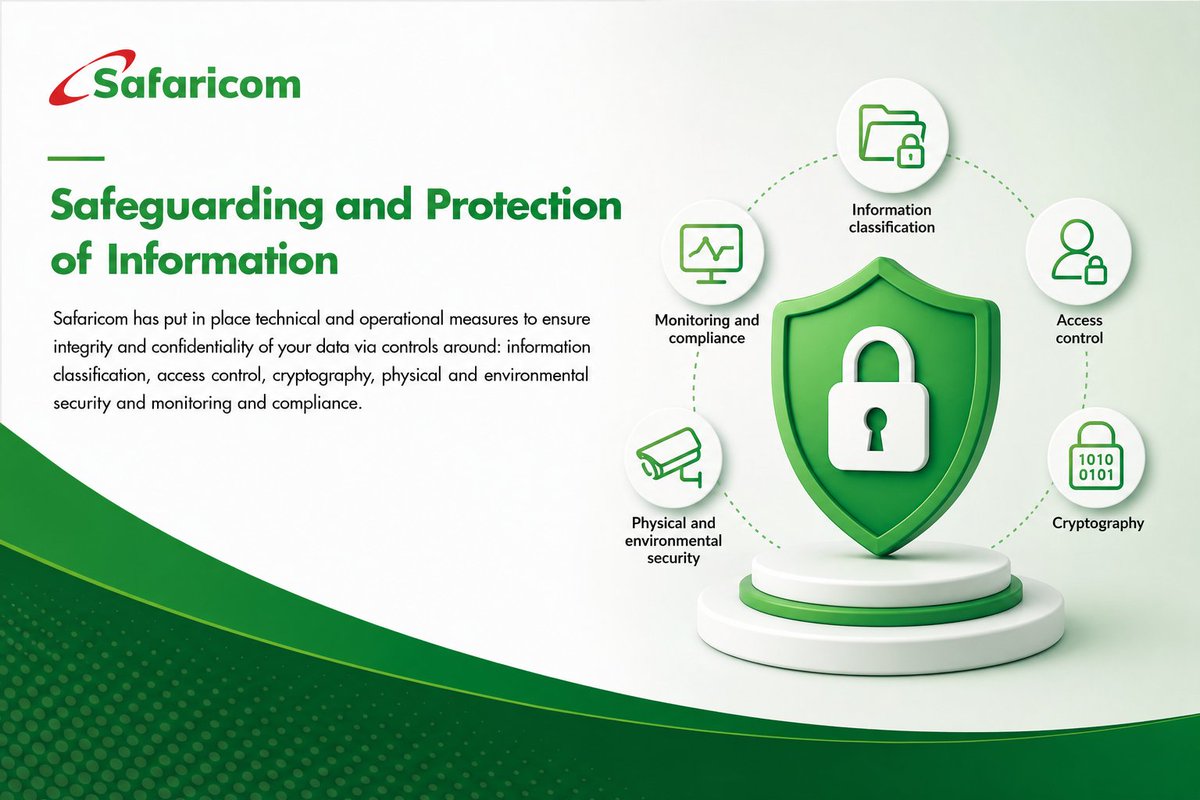
Safaricom says it does not share customer information with third parties unless required by law, such as through a valid court order. The company has also earned ISO 27701 certification for its privacy information management practices, an international standard for organisations handling personal data.
But no organization can eliminate all risk. The courts have continued to pay attention to data protection cases involving big technology companies including Safaricom, warning businesses that customer privacy is an area of increasing public scrutiny.
That makes privacy a shared responsibility. Companies must protect customer information. Customers also need to be careful about where they share personal details, which apps they install and who they trust with verification codes. The next time you send KSh200 for lunch or pay for groceries using M-PESA, you probably won’t think much about the digits hidden behind those asterisks.
But those missing numbers tell a much bigger story.
They mark a subtle shift in the management of personal data in Kenya’s expanding digital economy. It’s a reminder that people don’t think about privacy in hindsight when something goes wrong. It’s something to be protected every day.